Crochet Resolution #1

If I’ve learned anything from my lackluster performance concerning New Year’s Resolutions for 2011, it’s that the key to greater success in 2012 is to keep the list really really short… and absolutely doable.

DoubleDogDangit, I had some brilliant but unfulfilled resolutions from last year, for example: “screw not with deadlines, you procrastinator”, “lose those horrible, lingering five pounds”, “blog more often”, “exercise, you slug”, “organize the stash, you slob”.  Similar hopes for a better self have populated my list of resolutions for the past decade, ever witness to the foolish belief that I could change my nature in the span of a year. So I’ve decided to shift all of that stuff into a Ten Year Plan. Knowing that I don’t have to obsess over any of those things yet has instantaneously lifted my mood.

You’re not supposed to begin a numbered list if there’s only one thing in the list.  By labeling this “Crochet Resolution #1” I am implying, promising that there will be a #2 and perhaps even more.  No.  There can be only one. I should go back and change the blog post title, but it sounds better as is, so I think I’ll let this slide.

My number one and only one resolution for 2012 is deceptively simple: teach someone to crochet.  Many crochet professionals wouldn’t need to make a big deal or special resolution out of this because teaching happens to them as a matter of course. But those four words scare the hell out of me.

Teaching beginning crochet isn’t about one’s own expertise or experience or how many books you’ve written, how many designs you’ve published or how many awards you’ve garnered in your career because none of that matters to someone who doesn’t speak crochet. It’s about understanding exactly what’s happening every time you pick up a crochet hook.  It’s about breaking down the complex, compound motions of crochet into their constituent elements and then effectively communicating them to a total newbie who may very well be silently cursing you. I am in fear of being reviled.

Most of what I do with crochet is… well… rather complicated and leaves beginners flinging their hooks and projects against the wall in frustrated disgust.  I am best received by experienced crocheters who are conversant in the language of lace and aren’t put off by long, convoluted crochet patterns.  In other words I can teach techniques and constructions to those who already have crazy skills. This is easy compared to teaching beginners, trust me.

In order to succeed at teaching someone to crochet, I need to find the right victims… uh… students; I needs me newbies who are gung-ho but not too scarily so, as well as dedicated, self-sacrificing and patient beyond belief. Toward that end I have volunteered to join Vickie Howell and other noteworthy instructors at the Beginner Lounge at Vogue Knitting Live, 14 and 15 January in New York.  Throughout the weekend I’ll be that small person with the crochet hook lurking among the many knitting teachers, cringing in terror. If just one person shows up, looks me in the face and says “Yes, you can do this”, then I’ll be on the way to making my one heartfelt resolution for 2012 succeed.  Come and help me learn how to teach you how to crochet. 🙂

Simply Crochet Winner

Who knew there were so many geeky ways to generate a random number from one to 77?  It was giving me a headache.

So, on Christmas at midnight,  I just closed my eyes and stuck a pin in my monitor. 🙂

Congratulations to Jennifer Riley, winner of a free download of Simply Crochet: 22 Stylish Designs for Every Day by Robyn Chachula. Thank you all for your comments and well wishes.  Peace, Love and Yarn to everyone in 2012!

Winning Simply Crochet

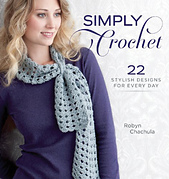
I am the last stop …  the tail end, the caboose, batting clean-up… on the blog tour for the new book, Simply Crochet: 22 Stylish Designs for Every Day by Robyn Chachula.

This bothered me a little when Robyn sent out the tour schedule to all the contributing designers and I saw my name at the very bottom of the bunch.  As a kid I was used to being closer to the front. As the oldest child of three, I went through everything first.  Isn’t it true that the first-born is always the test subject for developing parenting skills? At least I made sure I was at the dinner table ahead of my brothers because they would have inhaled all the food had I not staked out my share.

In school, before my nearsightedness was discovered and I got my first pair of glasses in third grade, I was inclined to sit closer to the blackboard so I could see it. Somehow I turned into one of the geeks-with-glasses (House Magoo) who congregated at the front of the class. I would often peer longingly at the cool underachievers hunkered down at the back of the room and wished I could hide back there, too. I really didn’t need to be so close to the teacher that I could see the lint on his or her lapels.  Whether we students were sorted in alphabetical order or by height, either way I found myself toward the beginning of every line, or seated near the front of the room, or in the first row of every class picture, or standing on the floor in front of the chorus risers and the rest of the second alto section.

I wanted to ask Robyn why I had to be last.  I held my tongue, but  I wondered about that. Ellen Gormley, whose blog GoCrochet was the next-to-last tour stop yesterday says we are here either because we are the anchors (which is a typically sweet thing for Ellen to say) or because our designs use the most balls of yarn (not true). In a book of projects aimed at giving “budget-conscious crocheters the tools to make the most of their yarn stashes”, bloated yarn requirements win nothing but the booby prize.


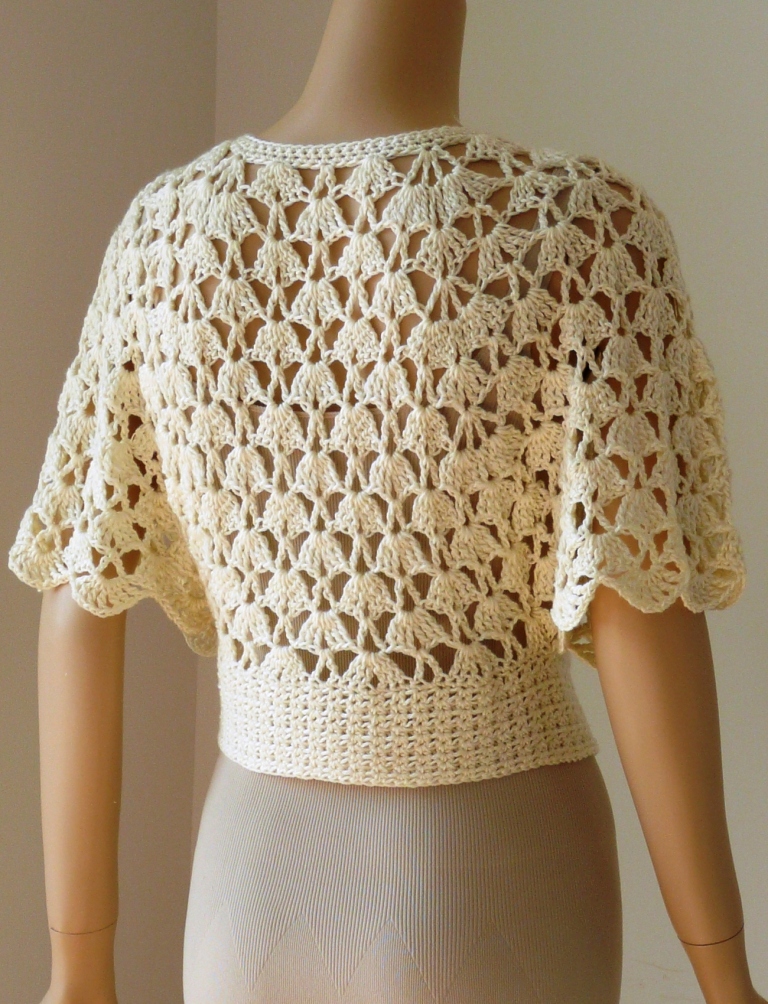
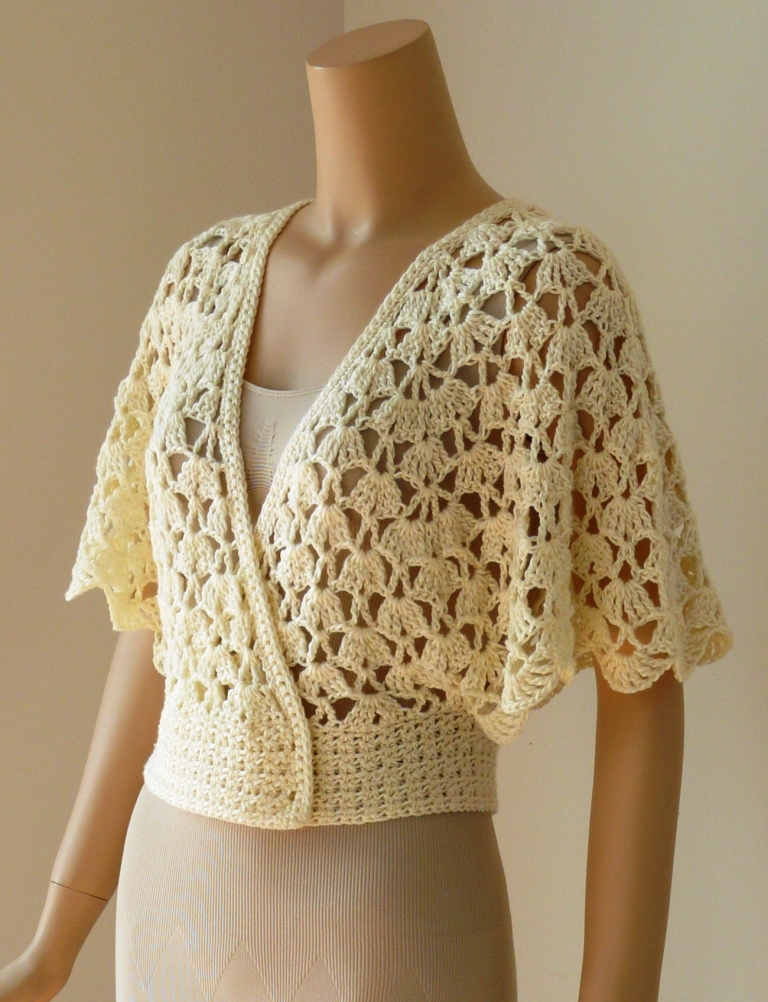
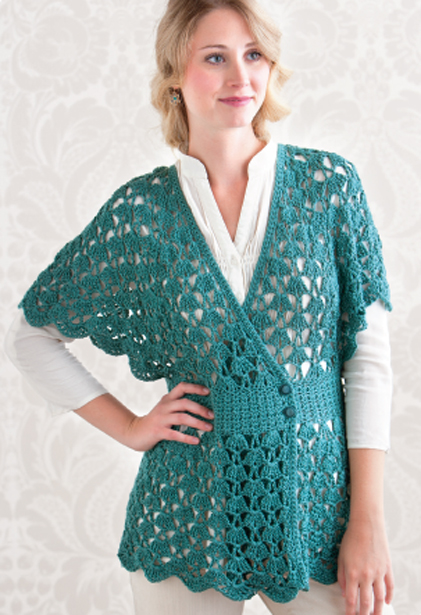
I crocheted both of the book samples myself and I assure you that, with the exception of the long tunic version in the largest size (2XL/3XL), Spa Shawl Top can be made with 3 to 5 skeins of yarn.  That’s considerable yarn economy for a full, loose fitting adult garment. The key contributing factors are the open lace stitch and the great yardage in each skein of silky NaturallyCaron.com Spa. It’s the yarn I talked about last post, possessing a  special Z-twist which not only helps the tall loose lace stitches hang together but keeps them looking good.

Once I got my copy of Simply Crochet  and realized that my design  Spa Shawl Top was the last one in the book, I felt pretty stupid. Naturally I am last because IT is last. So I’m good with being here today unless I start obsessing over why my design ended up being the last one in the book. Hey, I guess I finally made it to the back of the classroom with the cool kids, huh?  Astoundingly, I have been included in a class made up entirely of cool kids.

Honestly, we were not told who-all the other contributors would be, not at the beginning. Publishers insist we harbor deep secrets for way too long. So when the list of designer names was at last revealed, it was brilliant, representing today’s best and brightest crochet talent. I am pleased to admit I actually know most of them, count many among them as friends, owe at least a few of them drinks (or chocolate cake), swap yarn and war stories with a couple, but mercifully don’t owe any of them money.

Here’s the complete blog tour schedule FYI, in case you haven’t been along for the entire ride and want to rewind.

Simply Crochet Countdown to Fun Schedule:
1 Ball or Less
Dec 1 Iced Ascot by Rebecca Velasquez
Dec 2 Flapper Hat by Margaret Hubert
Dec 3 Billows of Baubles Scarf by Sheryl Means
Dec 4 Twist Cowl Wrap by Linda Permann
Dec 5 Mystic Cuff by Robyn Chachula
Dec 6 Emma Lace Scarf by Simona Merchant-Dest
Dec 7 Diamonds and Lace Hat by Linda Permann
Dec 8 Neck Lattice by Vashti Braha

3 Balls or Fewer
Dec 9 Botan Placemats by Marlaina Bird
Dec 10 Tapestry Basket by Carol Ventura,
Dec 11 Blooming Beauty Purse by Tracie Barrett
Dec 12 Nedburt Puppet by Robyn Chachula
Dec 13 Natalie Shrug by Megan Granholm
Dec 14 Giselle Vest by Simona Merchant-Dest
Dec 15 Sidney Cardigan by Robyn Chachula
Dec 16 Annabel Shawl by Kristin Omdahl

5 Balls or Fewer
Dec 17 Tallula Baby Top by Marlaina Bird
Dec 18 Amelia Cardigan by Julia Vaconsin
Dec 19 Float Vest, Float Cardigan by Robyn Chachula
Dec 20 Linked Jacket by Robyn Chachula
Dec 21 Dots and Dashes Blanket by Ellen Gormley
Dec 22 Spa Shawl Top, Spa Shawl Tunic by Doris Chan

Not everybody gets why I’d work on a book authored by somebody else. I showed the book to my mom and had a hard time explaining why Robyn Chachula’s name is on the cover and not mine. The major reason I agreed to contribute to Simply Crochet is because of Robyn. I adore her, and not just because she is shorter than I am and her glasses are even thicker than mine (just kidding, Robyn). She’s a total dynamo, as scathingly focused as a laser when she needs to be, yet goofy otherwise. I can’t imagine how she manages to juggle her awesome career with home and family (hey, CJ!).

In fact, Robyn is so good at getting her friends to work with her that I signed on to do a design for the next book, Unexpected Afghans: Innovative Crochet Designs with Traditional Techniques by Robyn Chachula, coming in June 2012, available for pre-order. Yes, I briefly wandered over to the dark side and designed an afghan.  No, I can’t talk about it yet. And, with any luck I will not be the last stop on that tour!

So, to sum up nearly a month of blog tour fun, Simply Crochet is now available both in paperback hard copy and as a downloadable e-book. Please check out this beautiful collection of designs and thanks for following the bouncing blog ball to this final stop. I know everybody is busy right now with the holidays, but if you take a few seconds to make a comment on this blog post, you’ll be entered to win a free download of the e-book from Interweave Press. Consider it a last-minute gift to yourself.  Deadline for entries is midnight Eastern Time, Christmas Day, Sunday 25 December.  Don’t bother sucking up to me in your comment (unless you really really want to), because it won’t make any difference.  I’ll choose one commenter totally at random and announce the winner here on Monday.

Best of luck and Happy Holidays!

The Crochet Twist

Many times I have been asked to name my favorite yarns.  My answer, after considerable waffling, is always “well, it depends”. Do you mean what are the yarns I most enjoy using or which ones do I love for my own personal crochet? There is a difference.

Yarn is not only my passion, the stuff of dreams and stash, but as a professional crochet designer yarn to me is also the single most critical aspect of my work, an aspect over which I have zero control. You may not know that the yarns and shades used in the designs you see in crochet magazines and books are not necessarily chosen by the designers. For reasons not always apparent or transparent, yarn choices are made by or at least subject to the approval of the magazine or book editors, take it or leave it, like it or not.

That makes perfect sense to me.  Over the years I have learned to be flexible about materials for design and that has served me well.  Not only has it created for me a nice little  niche in the crochet publishing pantheon, but it has also given me the opportunity to handle yarns I might never have experienced. It is my job to make any yarn my employers throw at me look good in crochet. I have created hundreds of garments and accessories with everything from indifferent craft acrylic to luxury cashmere, in every weight from lace to super bulky.  I maintain that every yarn deserves good design. Even if it takes extraordinary effort, long nights of yarn whispering, cajoling and tussling, eventually every yarn must speak to me.

I know this sounds like a cop-out, but honestly, I have enjoyed almost every yarn I have been paid to use.  Well, there was that time with some horrible bulky acrylic rug yarn. No joke,  I was sent stuff with the words “rug and craft yarn” on the label, which would have been perfect for… well, for a rug.  But not so wonderful for a garment. Oh, and I can never forget that nasty metallic chainette that I had to finish with drops of fray-check to keep the ends from madly un-chaining. I coulda done without those two jobs.

But here’s the thing. Sometimes the yarns that were the biggest pain in the butt to crochet turned into the most agreeable fabric, with all the qualities you could want, supple hand, wonderful drape, great stitch definition. So you have to ask yourself, is it worth enduring torture to arrive at something pleasing? Well, it depends, doesn’t it?

So you will not hear me dissing any yarns, at least not by name. But let me get back to the question. Given that I can get my hands on practically any yarn, you might think that my personal choices would be high-end or at least esoteric. Not.

I have allergies and so does Cookie, the fat white Chihuahua who runs this household. We fear rabbit (angora) most of all. Next most disliked is mohair. We can’t wear wool. We barely tolerate alpaca and cashmere. That pretty much rules out over half of the field, including many of the yarns that are the current darlings of knitters. By default I gravitate toward plant fibers, plant derived fibers and man-made-chemistry-set fibers.

But just because a yarn is made from cotton, silk, linen, hemp or rayon from bamboo, soy or whatever does not make it completely happy. It has taken me years of messing with hundreds of yarns to finally understand why I keep coming back to certain ones. It’s all to do with twist.  My boss, Vashti Braha and I toyed with the concept of yarn twist, but she’s the one who wrote about it a couple of years ago. (Share her experience crocheting tall stitches on her blog, DesigningVashti.)

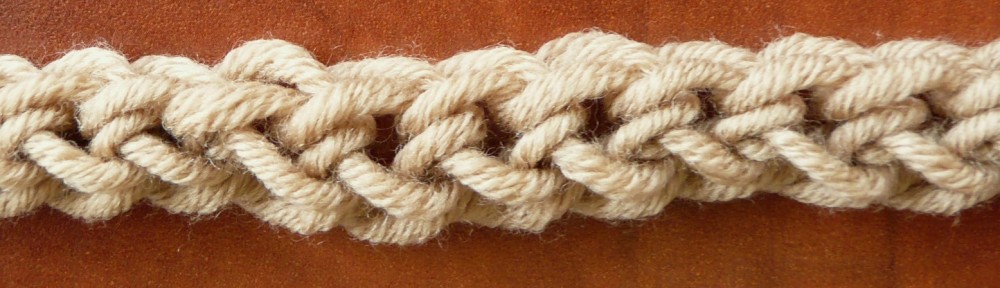
Most crocheters aren’t aware of how twist affects the crochet. All fiber (except, like, un-spun roving) has to be spun in some way to make it become a long continuous thing that then becomes yarn.  Some yarns are then constructed without any more twist, such as tubular, woven or ribbon type yarns.  For most conventional constructions, there is additional twisting together of plies, which can be done in two directions, clockwise and counter-clockwise. I hope I have this right, but the former gives you an S-twist, the latter a Z-twist. How can you tell? Simple. Look at a strand of yarn. See how the ply or plies all lean in one direction, either like the center stroke of an S or a Z.

This yarn is S-twisted.
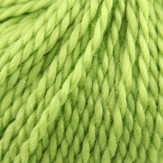
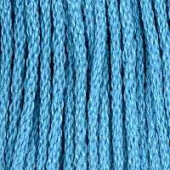
This yarn is Z-twisted.
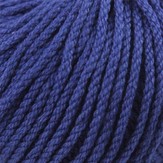
I am sure there is a reason that mills use one or the other.  Someday I will stop being such a slug and do the research and find out. In another life.

For now, all I can say is that the staggering bulk of what is produced has an S-twist.  Most yarns are produced with knitting in mind.  I never understood why certain of those yarns are awesome in knitting but look crappy in crochet. Perhaps not in a scientific way, but intuitively I now know that knitting tends to reinforce S-twist and crochet tends to rebel against it.

I suspect the reason is that the knitting yarn over is in the opposite direction of the crochet yarn over. I both knit and crochet and never think about this because I naturally do the right thing with whichever tools are in my hands. The process of crocheting makes a Z-twist. Each time you yarn over and draw a loop through you are giving the yarn a little counter-clockwise nudge. When you crochet with S-twist yarn, you are un-twisting as you go. If you crochet, un-crochet, crochet, un-crochet (as routinely happens in design) then a low-energy, loosely S-twisted yarn could lose all integrity before long. At the very least, the plies become separated and the yarn will be really splitty.

When I began examining yarns for their twisted ways, I thought to analyze my favorite yarns. Z-twist is almost always used with wool roving or singles like this:
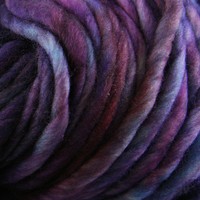
Cotton is routinely Z-twisted, notably for sewing thread and crochet thread. And, as I discovered, the yarns I kept returning to time and again are not simply non-animal fibers, but they are also Z-twisted.

NaturallyCaron.com Spa (see Cari Clement’s blog post for NaturallyCaron.com about Doin’ the Z-Twist)

And the Tahki Cotton Classic family:

Twist (more accurately, the lack of twist) is partly the reason I’m drawn to tubular yarn, like South West Trading Company Oasis:

and ribbon yarn, like Tess Designer Yarns Microfiber Ribbon. With these constructions, you control the twist as you go.

Don’t tell my employers, but  I automatically wince when a design yarn arrives that has multiple plies that are loosely S-twisted because I know that project will be splitty crochet hell. And I grin from ear to ear when the yarn has the crochet happy twist.
Crochet Marathoning

It is an annual event in which you either participate whole-heartedly… or skip altogether for lack of intestinal fortitude, time or heaven-help-you, yarn.

The Holiday Crochet Gift Marathon does not have a specific start date nor a finish line (other than Christmas morning) and isn’t the same distance for everyone, which doesn’t seem fair.  Crocheting five projects for our most cherished loved ones is a leisurely stroll around the block; cranking out dozens of pretties to fill an extensive gift list is the whole 26 miles and 385 yards at full tilt.

In my life BCD (before crochet designing) I stayed the course year after year.  Once the professional deadlines began piling up I had to ditch all personal projects.  Work trumps play every time.  It has been nearly a decade since I’ve run the race.  But I remember what it was like.

Fun.  It used to be awesome fun, and I say that with no trace of sarcasm.  I loved the whole process, from compiling the naughty/nice list (in other words, choosing which giftees were most worthy of something hand crocheted and who wouldn’t appreciate the gesture enough to deserve the effort), to coordinating yarns and projects, to the all-night end weaving sessions, to seeing the reactions (usually delight) of the recipients on Christmas. One aspect I often didn’t like was having to give away certain items. There was always a project or two per marathon that I loved enough to want to keep.  This is why you should always follow Marathon Rule #3.

So I have gotten ahead of myself. What I thought to do today is share some helpful and hard-won tips regarding the Holiday Crochet Marathon, most of them common sense. In doing so I don’t claim any expertise in the race, I only hope to show you what I learned, and in the process, make myself feel better about not being able to run this year.

1– Start early.  Earlier than you think.  Earlier than is seemly.  August would have been good, but as it is already November you should really be starting now.  At least before Thanksgiving. An acceptable reason for waiting until after Thanksgiving would be if you want to take advantage of possible Black Friday sale prices on yarn.  But really, you should already be a mile off the starting line.

2– Choose projects for which you have plenty enough yarn on hand.  Do not risk the agony of running out of materials to complete anything.  I cannot stress this enough.  If you have 4 hanks of a yarn, don’t try to squeeze a whole adult sweater out of them.  Choose a different gift project that requires less than 4 hanks.

3– Use yarns you will not miss.  I once crocheted a marathon project in one of my finest acquisitions, the softest, bluest, most luxurious yarn brought back as a souvenir from a trip.  The wrap looked so good on me.  Really. I still regret having given it away. So under no circumstances should you dig into your personal absolute favorite stash.

4– Do use yarns and colors that will be appropriate and  happy for the ultimate recipient.  Say you have a butt load of blue yarn because you just love blue and you’d really like to make gifts with it but  your sister doesn’t like blue. Pick something else for her, in her best color, not yours.

5– Know your limits.  Instead of planning too many marathon gifts, it is better to plan fewer and give yourself extra time in case stuff happens.  If you are a super fast, efficient, single-minded crocheter and can say with absolute certainty that you will not be sidetracked by inclement weather, unexpected guests or other emergencies, then by all means do more.

6– Pace yourself.  Can’t marathon if you burn out too soon. Take a breather after each project.  Pat yourself on the back.  Have some wine or chocolate before going on to the next.

7– No hinting to anyone. Do not tell people that you are making hand-crocheted gifts this year. If they aren’t the ones getting the pretties then they’ll feel miffed.

8– Bigger is not better. Huge, elaborate projects make wonderful special gifts but have no place in the marathon queue. Keep your projects to a manageable size.  This does not mean the gifts have to be easy or simple or plain.  Instead of skimpy, think of smaller projects as unique showcases for your skills.

9– Pay particular attention to the details, like end weaving, blocking if needed, and finishing. This raises the level of your work from homemade to hand-crafted.

10– Pour your passion, your very being into every step of the marathon.  Think about the person for whom you are crocheting while you are crocheting. You’ll discover that each gift will be the most precious thing you could give; not just a pile of looped yarn, but a piece of yourself.

Happy Marathoning!