>Candid Camelid

>There comes a time when a person has to put away her childish dreams and just grow up. It has taken me half a century to realize that I no longer want a pony for Christmas. I want one of these.
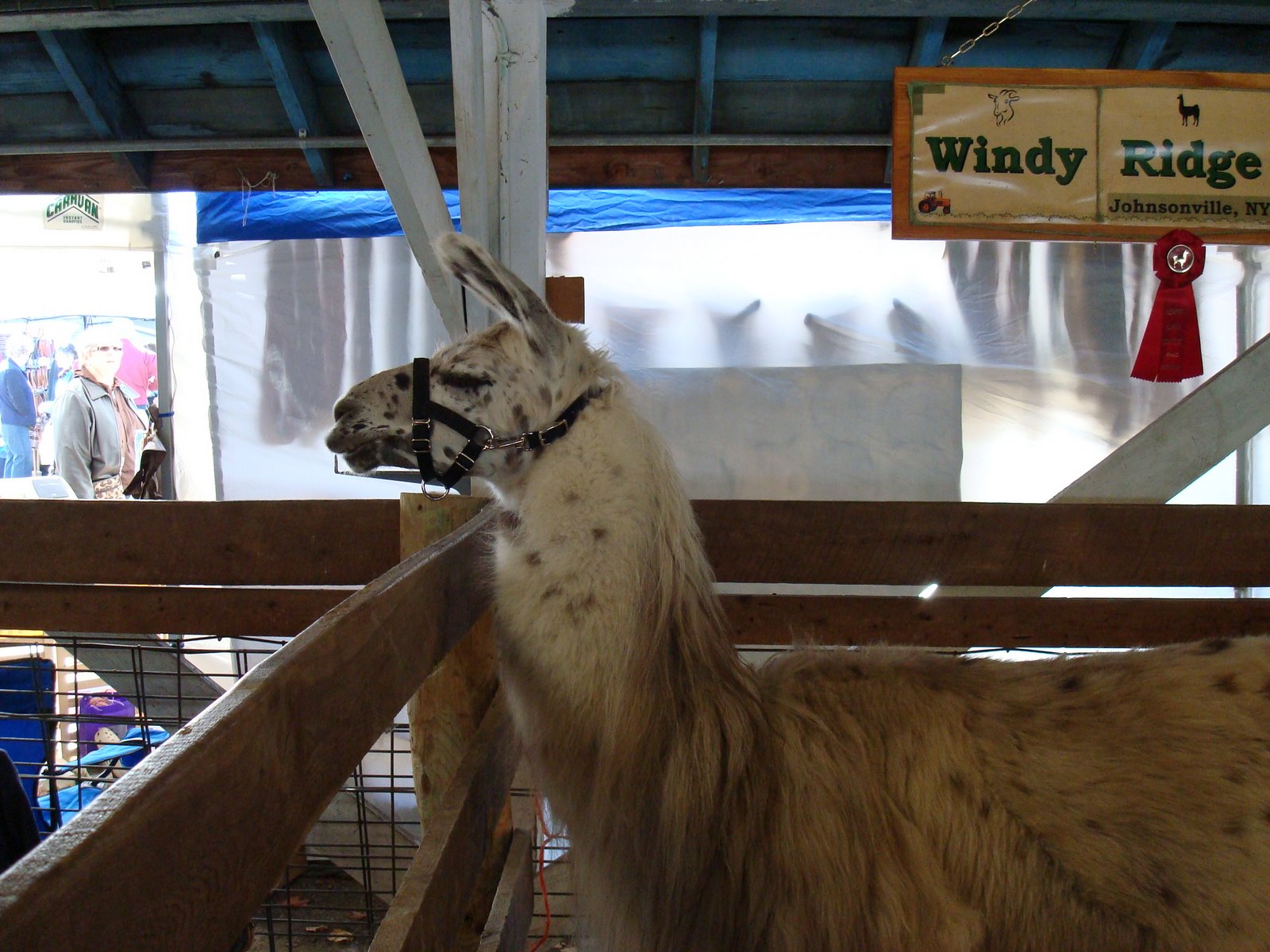
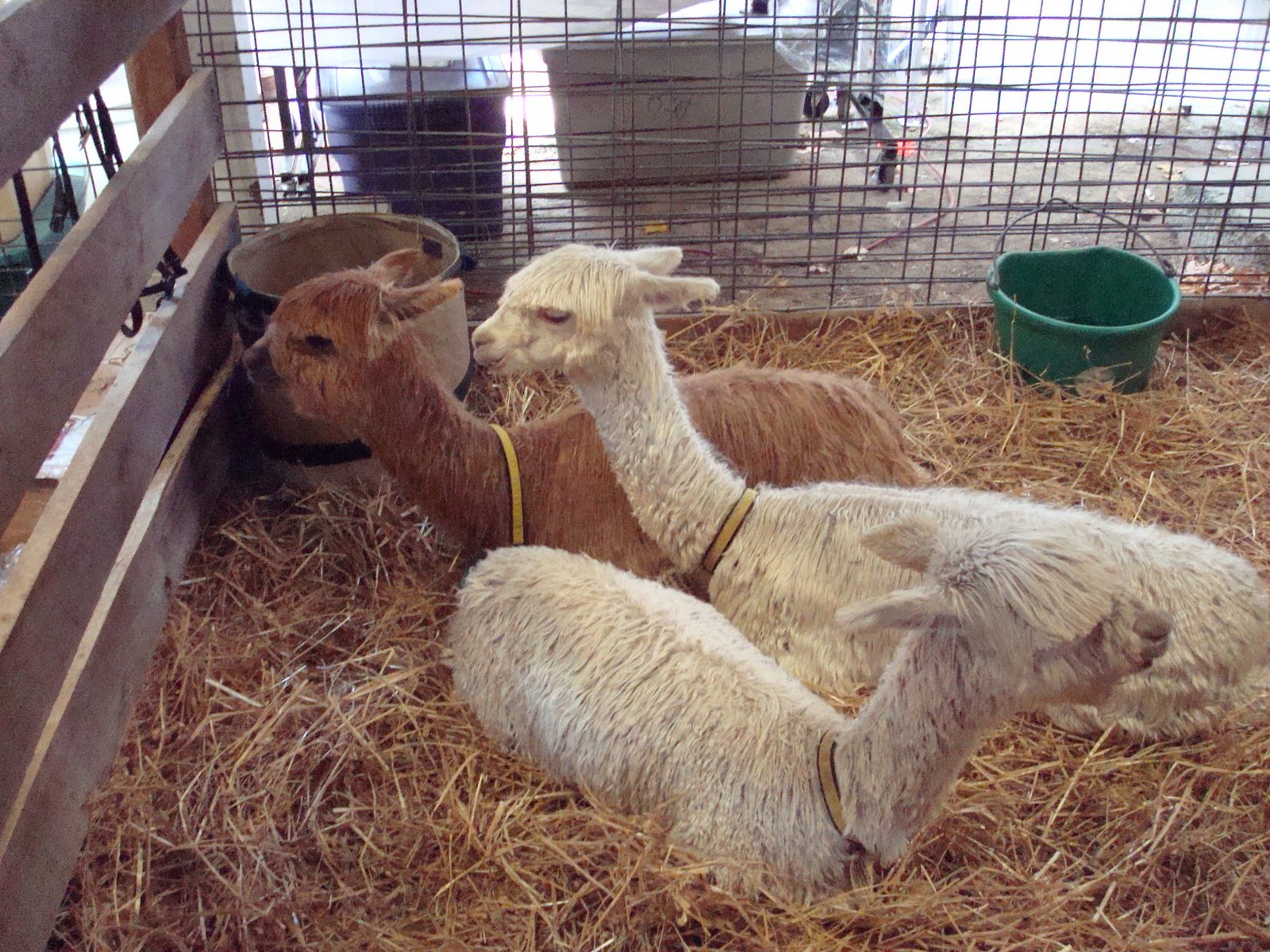
Or one of these.

I learned many things about llamas and alpacas while visiting the NYS Sheep&Wool Festival in Rhinebeck. Did you know that llamas, hardy, surefooted and endowed with much common sense, are able to carry as much as 25% of their weight for a dozen miles (an ability that would come in useful if I ever needed to move my yarn stash)? That their wool is soft, fine and grease-free, and comes in a wide range of colors, from white to black with shades of grey, beige, brown red, roan and everything in between (they even have spots, which I never knew)? That their poop is odorless and considered the best organic fertilizer available (how many beings can make that boast, really)? That they have no top teeth so they cannot bite? That they make very little noise other than humming to communicate? Yes, they spit. But only if you piss them off, really. And that they are generally calm, sweet-natured, curious, approachable, adorable creatures. Did I mention they give great wool? And that they cost way less to maintain than a small, bratty fat pet dog?

My chihuahua should be worried, very, very worried.

I had an amazing time at the festival. My thanks to my host Scott Meyer of Merritt Books and Sarah Breivogel, publicity manager from Potter Craft, for making me feel welcome and prepared for the book signing event. It was great meeting everyone. My big regret is that I spent the entire day Sunday signing books and chatting with friends and totally missed the Parade of Llamas and Alpacas. Doubledogdangit.

Thanks to Diane Moyer, my festival angel, time manager and bringer of coffee for these images because I didn’t think to bring a camera. DUH!

That reminds me of the list of important tips I must keep in mind for next year:
1) Fuggeddabout trying to be all cute and fashionable. Dress warmly in tons of layers even if you risk Michelin-man proportions. It was freezing. Good grief there was a half-inch layer of frost on my car when I got up on Monday. I had to take off my gloves in order to sign books so my hands were total popsicles the whole time until a visitor to my booth took pity and gave me a pair of hot hands or whatever they are called. These things are a miracle of modern science; small packs that are hot and stay hot for hours, used by hunters and other people with chronic cold hands. Gotta get me some of those.
2) Bring camera.
3) If you’re going to indulge in fried dough, stay out of the prevailing winds to avoid being tagged with powdered sugar. Oh, and steer well clear of the yellow jackets. Just ask Diane. Bring antihistamines if you are a stinging insect magnet like her because the first aid stations do not dispense any medications.
4) Get your bearings right away and try not to miss a thing. Like Building 22.
5) Travel light and watch where you’re going. It’s hard to stay out of every one’s way when there are such crowds and the sensory overload is making your eyes bug out. I got smacked around by people’s bags and run over by countless wheelies and strollers.
6) Maybe carry a small, portable yarn project that you can whip out while you’re waiting on the inevitable long lines.
7) Remember where you parked, mostly so you can stash your purchases and not have to lug stuff all day.
8) Figure you’re going to spend three times as much as you planned. You are there. The yarn/tools/books are there. Life is short. Cards accepted. And there’s an ATM on site, FYI.
9) If you’re on Ravelry, definitely get to the Rav party on Saturday night and make every attempt to get there on time. I was an hour late and missed the Bob cupcakes. Rats. Stick around for the door prize drawing. I won a set of KnitPicks Options interchangeable circular knitting needles. You should have heard the ooohing and aaahing when that prize was unveiled. I hope I didn’t seem too ungrateful when my ticket number was called and my first reaction was to shout out “I DON’T EVEN KNIT!”. Would have served me right if I had been lynched at that point.
10) Exit the parking lot via the back, the exhibitor/vendor gate. It dumps you off well away from the Route 9 gridlock. You’ll have to wander around a bit to get back to the highway, but trust me, it’s doable and MUCH faster.

See you there next year, huh?

>Let the bidding begin

> If you’ve ever lusted after a crochet or knit design you’ve seen in a book or magazine, here’s your chance to get your hands on an original. The Rwanda Knits Auction begins tonight at 11 pm eastern time and I invite you to browse, bid and win for a heart (and body)-warming cause.

Rwanda Knits is Cari Clement’s way of giving back to the world. She and her associates started this economic cooperative to aid refugee women. The project has grown to include 29 cooperatives around the country, with over 1500 knitters. Cari is constantly on the go, teaching, writing and speaking about Rwanda Knits, about the women, their lives, families and communities and about the work that they do. Her energy and passion are boundless and infectious.

I am so enormously proud that my design samples are included in these yearly auctions among those of such star designers as Drew Emborsky, Vashti Braha, Nicky Epstein, Teva Durham, Gayle Bunn. This year you’ll have the opportunity to own my Lacy Duster, a long and lovely coat in the color Vintage Rose.

I must admit I bid on stuff myself. Not my own designs, mind you. That would be too weird. But I bid on several knitwear samples last year and won TWO. There are always so many brilliant and beautiful things in the auction that I can get a little nuts in the bidding. But there is one item I’d pay dearly to own and I guess I need to mention this to Cari. I want a Rwandan school uniform sweater knit by one of the cooperatives!

>Scouting Yarns

>My second book, Everyday Crochet, was written over a five month period in 2006. It was begun almost immediately after correcting the proofs for the first book. That was a mistake. I notice that other crochet and knit authors are able to crank out books at an alarming rate of one or two per year forever. For me the cycles of designing, crocheting, writing, editing and re-editing two books in a row took a huge toll. I learned that I need time off between birthings; time to recharge the design centers of the brain and rest the hands.

So it has been nearly two years since I kissed that last book goodbye and sent it off to my publisher. At the time I asked everyone I knew to smack me upside the head if I mentioned wanting to do book three. My head is still attached to my neck, so that should give you a clue as to how well my alleged friends listened to me. Mercifully, enough time has passed that the agony and angst, sleep deprivation and stiff hands endured during the book process are a murky memory. All I can think about now is how much fun it was to plan a book.

The planning truly is the best part. The best of the best is casting the design yarns. I wish I could be more like other authors who already know exactly what their book designs will be, which fibers, weights and approximate amounts are needed before they choose specific yarns. That would make the casting call less of a cattle call. But I design on the fly. I need the materials in my hands first. It’s up to the yarn to tell me what it wants to be. That means the choices I make today are really critical and risky. But I find that nothing excites the senses and fires up the design neurons like being up to your eyeballs in yarn.

With two books and several recent magazine placements as validation I now have the cred and confidence to request yarns from just about any source. Imagine the entire fiber multiverse as your candy store. What wouldn’t you do for an all-access pass to the latest yarns and newest shades? Could you control yourself if all you have to do to make truckloads of yarn appear on your doorstep is simply waggle your little crochet hook? How overpoweringly empowering is that?

Well, sure, this does not necessarily mean I will be granted my entire wish list. I’d quickly become a fracking insufferable brat if I got everything I wanted. More of an insufferable brat, anyway. So I learned to ask for the moon and be flexible enough to be satisfied with a half moon. Let the wild rumpus start!

Where do I begin the begging? I look first to the companies that have been supportive and generous to me in the past. I react positively when yarn company reps throw product at me, either at TNNA industry shows or in the form of surprise designers’ packages throughout the year. I lean heavily on yarns with which I have lots of experience and exceptional design results. You might think the virtual yarn cart of someone so spoiled for choice would be filled with high-end fibers and brands. Not so. I work with a range of products, from craft-store big box yarns to scandalously pricey luxury stuff. In the back of my mind I hold the thought that anyone can make something nice out of great yarn, but it takes a canny designer to make something great out of ANY yarn.

So far I’m looking at a few favorites, old and newly acquired. Definitely the tried and true Tahki Cotton Classic . Most definitely the lovable NaturallyCaron.com Country and Spa . Some fabulously drapey hemp from Lanaknits HempforKnitting, and new hemp blends like Cashmere Canapa. The latest from Vermont Organic Fibers, a fingering weight of O-Wool and the cotton/wool blend Balance. Some gorgeous Manos del Uruguay Silk Blend from the distributor, Fairmount Fibers. The Royal Llama Linen from Plymouth Yarns so favored by my co-conspirator Vashti. Interesting stuff I’ve designed with recently, including two Coats&Clark products, BambooWool and the surprisingly pleasant new yarn made from recycled soda bottles, Eco-Ways. And thanks to my girlfriend, newly crowned yarn rep Chava, I have a staggering number of new-to-me beauties from Feza yarns.

Very soon I’ll be so flush with yarn that they’ll have to send out the St. Bernards to find me in that avalanche. Oh, and lets not overlook the scouting possibilities in a couple of weeks when I visit the NY Sheep & Wool Festival in Rhinebeck. Happy, happy, joy, joy!

>BACKSTORY: Sweet Lorraine

Sweet Lorraine>

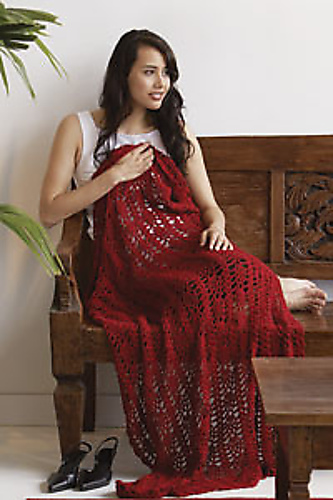
Now appearing in the Fall 08 issue of Interweave Crochet, my Sweet Lorraine lace throw began, not as home dec, but as a scarf for Lorraine. She was my other mom and the best person you could ever know.

From Lorraine I learned the secrets of how to cook for her son, my partner John. This was not gourmet cuisine, but hearty, homemade food that spelled C-O-M-F-O-R-T. For each of the holiday meals I was privileged to share with her family, Lorraine provided a bounty of South Philadelphia Italian favorites. There was always enough to feed several armies and all if it was made from recipes passed from nona to mother to daughter. Each dish had its own family spin on it, prepared the way it had been for generations. So instead of arguing that garlic and onions should not be allowed to brown, or suggesting that using lightly sauteed fresh tomatoes made a fresher tasting sauce for pasta than using canned tomato paste or insisting that chops and roasts did not need to be incinerated to be edible, I simply went with it.

Through Lorraine’s kindly and patient tutelage I learned how to make the red gravy (spaghetti sauce) heavy with wine, simmered for hours with sausage, bracciole and hunks of pork; also ‘scarole soup with mini meatballs ladled over savory, eggy croutons, ricotta cheesecake, a crustless pie topped with cinnamon, and my personal favorite, fried dough, twists of yeast bread dough (some with an anchovy filet tucked inside) deep fried in her ancient electric skillet, the non-fishy ones tossed in sugar.

Part of the family tradition required that we (well, mostly just the guys) eat until we could not breathe. The best remedy to avoid suffocation was a walk around the block, often impossible to administer since the other tradition entailed drinking so much wine that we couldn’t stand up.

It wasn’t a one way thing. I managed to give back some food/love of my own. Lorraine, already late in her life when she adopted me as un-official daughter-in-law, had long ago stopped fussing with baking. So that’s where I could step up. After a couple of seasons I figured out her dessert and carb buttons and kept her supplied with special baked goods. Every birthday I showed up with a Mandarin Chiffon Cake made with freshly-squeezed tangerine juice. At Easter I supplied her with popovers laced with fragrant grated nutmeg. At Christmas I plied her with Almond Torte containing half a pound of almond paste, or Buche de Noel dense with chocolate ganache.

In the past few years, as my crochet career took up more and more of my time, I had stopped crocheting gifts for friends and family. Except for Lorraine. How she cherished the things I crocheted especially for her. Last December I stole precious time from design work to dream up a new gift for Lorraine, a lacy pretty little scarf that I knew would look terrific with her dressy coat. I tinkered with a lace pattern called “Strawberry Stitch” because she made a mean strawberry shortcake. I used a couple of small hanks of a cloud-soft cashmere/silk boucle yarn from the stash and finished the scarf a couple of weeks before Christmas. Nestled in some awesome holographic tissue paper, neatly boxed and gloriously gift-wrapped, Lorraine’s scarf was ready and waiting to be delivered on Christmas Day during the traditional family gathering and dinner.

I couldn’t believe it when we got the call days later. Lorraine was gone, quietly slipping away a week before the holiday, a week before I could see her and give her one more gift of love. The second stage of grieving is denial, huh? Well then I was stuck in second for months afterward.

What helped me to move on was the act of letting go of Lorraine’s scarf. Don’t get me wrong. The actual scarf is still in that gift box. Still on my mantle. What I offered to Kim Werker and Interweave Crochet last spring was the design. The process of writing the crochet instructions and stitching the sample for photography turned out to be just the therapy I needed. This was a chance to memorialize my other mom and in a small way share some of Lorraine’s abundant love with you.

So if you decide to make the design, whether as a scarf, stole or throw, perhaps as a holiday gift for a loved one of your own, maybe you could think of her just a little bit. And, I know this is asking a lot, if you could imagine you are hearing the voice of Nat Cole singing a chorus or two of “Sweet Lorraine” while you are crocheting, even better.

>Size Matters

>It matters when we’re talking about crochet hooks and matching hooks with yarn. You always want to use the appropriate sized hook. If you’re working from a pattern, then obviously you start with the one specified in the materials or tools section. Then feel free to keep switching hooks and sizes until you can hit the stated gauge.

Hey, but what if you want to start messing with the fabulous new stuff you just brought back from Portland or wherever and you aren’t waiting around for the right pattern. Or maybe you want to do like an All Shawl where you can use any yarn. With enough experience you’ll simply know for yourself which hook will work. But here are a few pointers on how to get started.
If your yarn comes with a ball band or label, read the fine print. A few yarn manufacturers put crochet hook and gauge information right on there. Lucky if you can find this. Most do not.
Failing that, check for a little yarn skein symbol like this:
That’s the Craft Yarn Council of America’s standard yarn weight system that the industry is being encouraged to use. You can download the Standards & Guidelines and use this to de-code much of what’s on yarn labels these days. Among other things, the booklet gives descriptions for each yarn weight category and suggests gauges and hook/needle sizes. You’re going to see all sorts of words that describe yarn weight: laceweight, fingering/sock or baby weight, sportweight, DK (double-knitting) or light worsted, worsted or Aran weight, chunky, bulky, superbulky. Some yarns defy precise categorization or fall in-between. Some yarns labels are just wrong. So don’t let the tags confuse you.
If you’re not finding a little skein symbol, then look for some of the other information in the fine print. Most yarn ball bands have a knitting gauge. That’s the tiny grid representing a 4 inch square swatch in stockinette stitch. There’s always a needle size listed with these gauge swatches. If you don’t know squat about knitting needles, just remember that in the American sizing system, the needle number/mm size corresponds to a crochet hook number/mm size (until you get into the really big sizes, then it gets all hinky). So a size 8 knitting needle is 5 mm and the same diameter as an H-8 (5 mm) crochet hook. You could start with that suggested size, but more often than not I find that I have to go up at least two sizes to get a comfortable gauge. So for size 8 knitting needles I would try a J-10 (6 mm) crochet hook.
What if there’s nothing like this on your label? Occasionally you can get an idea of the yarn’s place by comparing the yardage per ounce or per standard 50 g ball. But that involves too much math and can be misleading if the yarn is loftier than average or denser than average. Just use common sense to lead to you a close enough match.
Ultimately, how do you know if the hook is the right size for your yarn? Everybody crochets differently and has different expectations of what the results should be. Just crochet a bit and see how it feels. Does the hook glide in and out of the stitches smoothly and easily, without undue splitting, hanging-up or dropping of loops? Do you like the fabric you’re making? Then you must be on to something!