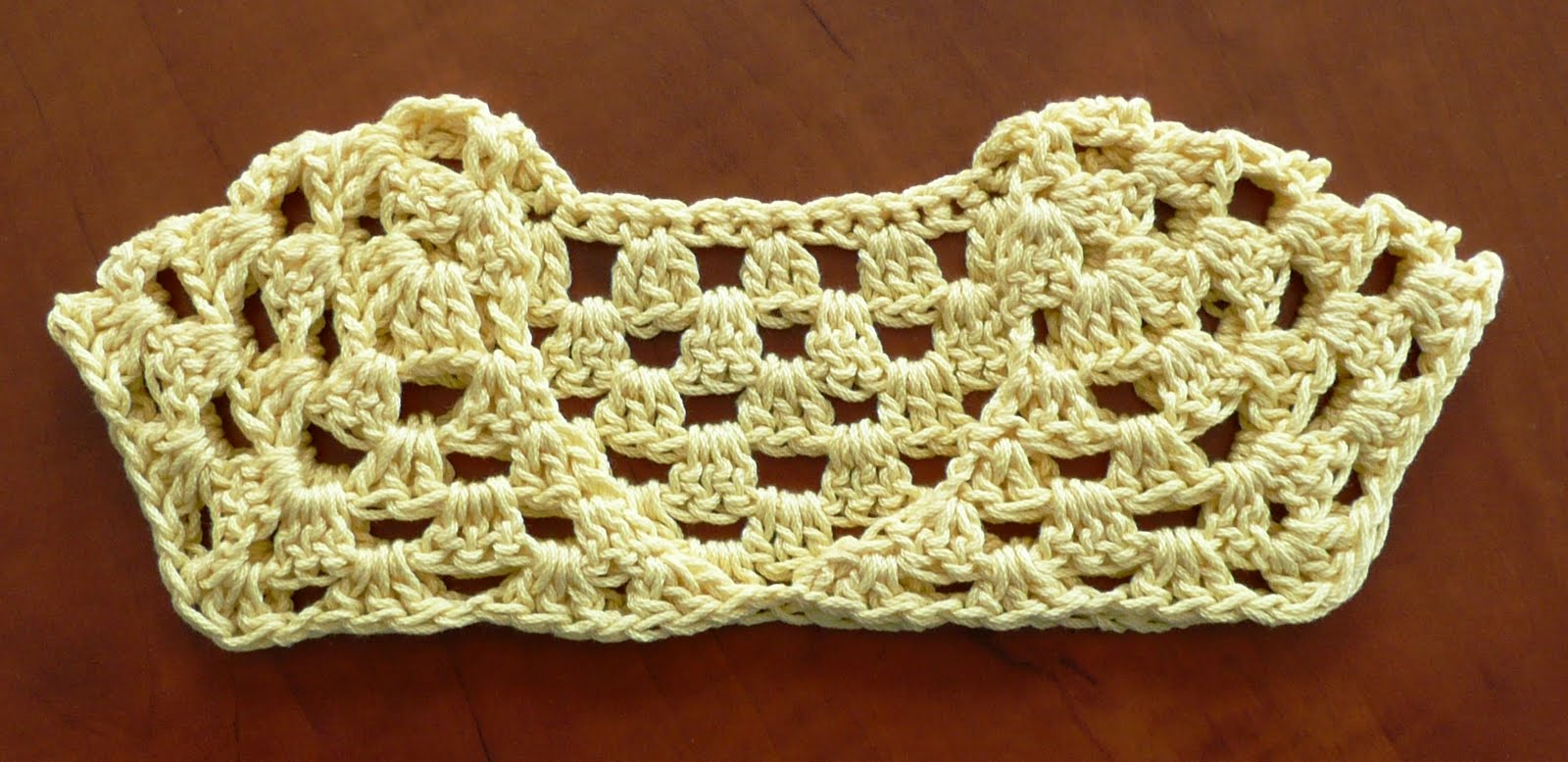
Link

>Have I mentioned that one of the perks of being a crochet designer is that I never have to match any other crocheter’s gauge?  Given that I design the project, make the sample garment and write the pattern, I am allowed the luxury of setting the gauge.  I never realized how empowering it has become being the one to dictate the number of inches per a specific count of stitches or stitch pattern repeats.  It tends to make one unspeakably smug and self-righteous.  Can’t match my stated gauge using the exact same yarn?  Too bad.  Want to substitute another yarn?  Good luck with that!

All of it, every single fracking hubris-laden moment of my designing career, has returned to bite me in the butt.  This month I have promised to release the next design for my independent pattern line, DJC2: Tank Girl. I started working on Tank Girl not that long ago while the Northeast was still in the grip of stinging winter cold, snow and ice. At the time it seemed like a good idea to offer Tank Girl in a warmer, cozier fiber as a layering vest.  So the design began with the wonderful yarn in hand, Spud & Chloe Fine, a fingering weight blend of superwash wool and silk  that probably makes awesome socks, too. And, for fun, I also sampled a tank in Kollage Sockalicious, which is a softer, plumper yarn but worked perfectly to the same gauge.

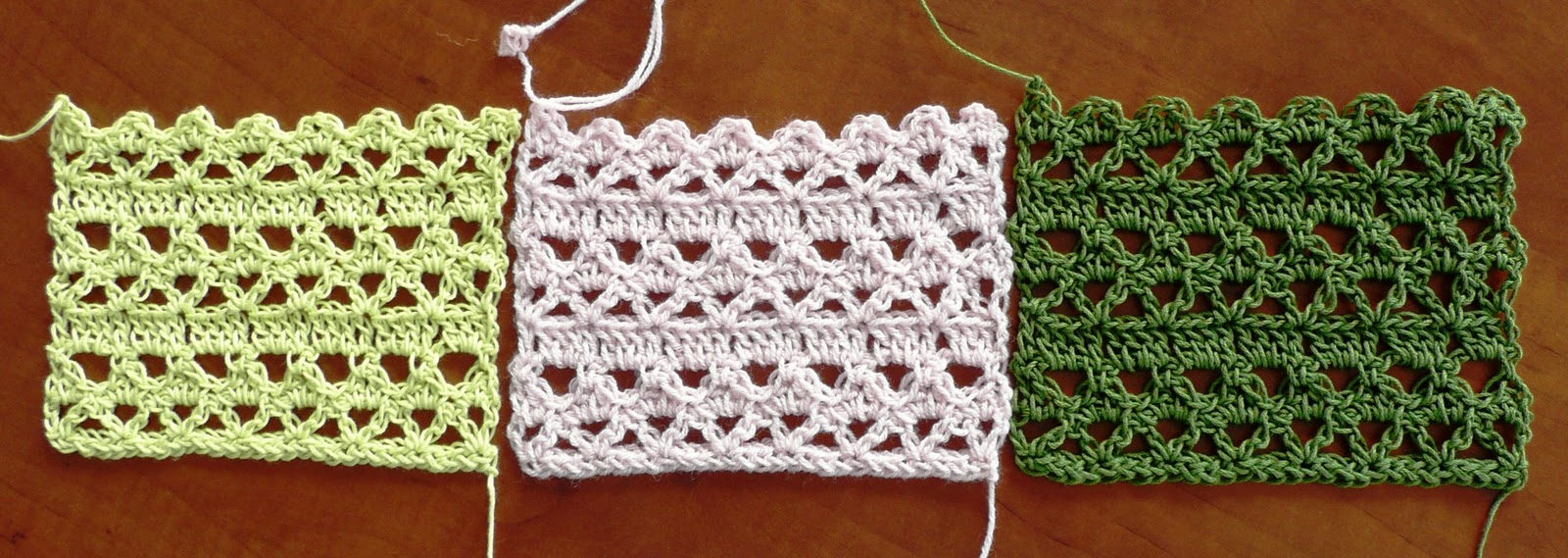
Sample in DMC Senso, fine gauge

The universe being what it is, a gang of cosmic forces kept me from completing Tank Girl right away.  So now the seasons are threatening to change and think I should switch gears, stay ahead of the curve and make my tank samples more spring/summer-like.  I tossed the stash looking for substitute fingering weight yarns in cotton or blends with cotton, linen, bamboo, whatever would work to gauge and be kid-friendly, washable and durable.  I discovered that there aren’t a lot of choices for comfortable, easy-care yarns in this weight class, at least not to be found in this house.  So I amassed a few that came the closest and swatched them all.

Imagine my dismay when none of my intended swaps would work to gauge, partly due to the fact that wool and animal fiber yarns have some give or stretch, whereas cotton and other plant fibers have none. Also, most animal fibers have some surface texture and stick-to-itself qualities that many plant fibers do not. Whatever the reasons, I found I could get the cotton/plant yarn swatches to match either stitch gauge or row gauge but not both.  I switched hook sizes.  I switched hook styles.  I wound and rewound balls in case the tension off the skeins was making any difference.  I cursed, I prayed. I did everything except crochet standing on my head and still I could not get any of the non-wool, warm weather choices to match my own gauge.

What I swatched:

  • DMC Senso, a soft blend of microfiber and cotton that is listed as a Size 3 crochet thread.  Not a thread, trust me.  It is a lovely fingering weight yarn and is terrific for fashions.
  • Aunt Lydia’s Size 3 Crochet Cotton, not as soft but workable.
  • Red Heart Lustersheen, a cabled acrylic fingering weight, very soft, a better color range than the cotton threads.
  • Elsebeth Lavold Hempathy, a sportweight blend of hemp, cotton and rayon; not as fine as the above, but would make a terrific spring tank.
  • Tahki Cotton Classic Lite, a sportweight mercerized cotton in awesome colors, but a touch heavier than all of the above.
DMC Senso, Spud&Chloe Fine, Tahki Cotton Classic Lite Swatches

I also tried a few fingering weight yarns that I’d be loathe to use for kid wear.  Fine gauge silk and fine gauge linen. Still no joy. Looking at the swatches this way, it doesn’t seem as though there’s much difference, but when the gauge is multiplied over the width and length of a garment, it really gets messed up.

Tahki Cotton Classic (pink), Kollage Sockalicious (blue)
Elsebeth Lavold Hempathy (green), Spud&Chloe Fine (pink)

My solution?  Heck, if the yarn won’t come to the gauge, then re-tool the gauge to fit the yarn.  This would not be possible in traditional pattern publishing where space is a limiting factor.  We don’t worry about word count in download land, which leaves me free to offer as many sets of instructions in as many gauges and variations as necessary to cover the bases for the range of yarns you might want to use.

It’s going to be a crap-ton of work, but worth the extra pages, trust me. Barring any unforeseen shifts in the universe, you should be able to find DJC2: Tank Girl, a seamless, lacy layering vest sized for girls, tweens and teens, in a couple of weeks at www.designingvashti.com.

>On the Road: Broomstick Crochet

>It’s never a good thing to admit that you hear voices inside your head.  What has been pestering me for the past couple of years isn’t quite a voice, more like the tap-tapping of a pipping chick on its shell, the sound of an idea that needs hatching.  On the other hand, it could be the tick-ticking of a timer rigged to detonate a kilo of C4. Whether it’s a bird or a bomb… that sort of depends on you guys. For the voice I am hearing, the one I am poised to heed, is the call to teach.

There is a saying that those who can, do; those who can’t, teach.  That’s total rubbish and a disservice to and denigration of the profession.  For me, doing crochet is natural.  Designing crochet, while not always straightforward or easy, is a pleasure and a passion.  Teaching crochet is ungodly difficult. Teaching is ground not to be tread lightly or hesitantly.  Teaching demands patience, planning, preparation and perspiration, none of which I felt capable of giving until now.

Before I began writing my third book, Crochet Lace Innovations, I was convinced I would never teach.  I disliked school, classrooms and {choke} homework. I could never put myself in the position of inflicting any of that on anyone else.  HA!  It’s amazing and scary how writing a book can lead to self-discovery.  As I went on to write, “The optimal time to teach is when you yourself have just absorbed something so fantastic, are so totally fired up with the process that you simply can’t wait to share it with someone.  Great teaching isn’t about parading you expertise; it’s about bringing someone else to your skill level along the path where you’ve just been.”

I had always assumed that teaching would sap precious time and energy away from my primary mission, to design and share awesome crochet.  What I discovered over the past two years since writing those words in my book is that teaching crochet, explaining and demonstrating for others what I do, getting in touch with crocheters and pattern users face to face, will ultimately benefit my designing.  It is so worth what I will gain in return in terms of solidifying my own commitment to the craft, finding out what makes crocheters truly happy, making myself a better designer. All I needed to push me over the precipice into fully realized teacher hood was the same triumvirate as crime solving:  Motive, Means and Opportunity.  All three have come together in a cosmic confluence that can not be denied.  In other words, I have run out of excuses!

Although the material that crocheters most want to absorb from my brain concerns my chief MO, seamless garment design, I had to face the reality that it would be impractical and likely impossible to cover the subject in a single three-hour session.  And there would be much, much homework.  And I would have to be very strict about who could sign up, as a master-class on this level assumes students possess not only advanced crochet skills but also the stomach for it.  That class must wait for a future set of Motive, Means and Opportunity.

For my first gig I have chosen a more accessible topic, one that I know will be fun for all.  I am so excited about teaching this because it is crochet technique I absolutely love and can’t stop doing (Motive).  I not only dedicated a chapter to it in my last book, but have also been busily writing about it and offering Broomstick designs for publication, which you will see in the coming seasons, so I feel mightily empowered to show others how to do the technique (Means).  And I was asked by a really great guy, founder of the Merritt Bookstore family and genial book signing host Scott Meyer, to put together a demo to go with my scheduled appearance this year at the NYS Sheep & Wool Festival in Rhinebeck, NY (BINGO…  Opportunity!).

So, on Sunday morning October 17th, 2010 I present the premier of Magical Broomstick: Crochet Lace in a Flash.  Follow the link to view the details and to sign up.  Registered students receive a free two-day pass to the Festival.  And my students will get, courtesy of Caron International and the Tulip Company, a complimentary Etimo cushion grip crochet hook.

Also, if you’re in my neck of the woods, please join me for an afternoon of crochet at the Chester Springs Studio, a vibrant arts center at Historic Yellow Springs in Chester Springs, PA, Saturday, 13 November, beginning at noon.  From 1 to 3 pm I will be giving the above Magical Broomstick workshop, with a wrap-around of free mini-clinics for crochet learning and Q&A before and after.

I guess I have to bite the bullet and create a blog page for my teaching schedule.  YIKES!  I never imagined doing that.  Never say never.  🙂

>Hitting a smaller target: Part 4

>Yarn is a gift from the gods.  Yarn is a pleasure that calls to us from yarn shop shelves, from the pages of catalogs and fiber web sites. I have previously written about a fiberazza’s relationship with yarn here.  Unlike other commodities that one can seek, purchase, collect and stash (like Hummels or vintage cars), yarn is not considered the end product of the consumer chain.  Nope.  We are expected to take our yarn and make something out of it.  We aren’t allowed to have yarn for its own sake.  Yarn must become something else in order to legitimize our desire for it.

So yarn is also a cosmic joke. No matter what plan or project we had in mind when we purchased or acquired the yarn (if indeed there was a plan) life will intervene. Times, tastes and situations change.  We change. I look back with dismay at some of the yarns I stashed a few years ago.  What was I thinking?

I have heard of crocheters who don’t stash.  They get yarn, just enough for a project, they make the project.  They go on to the next yarn purchase and project.  To me this sounds so sane and reasonable.  But I don’t actually  know anyone who works this way.  Really.  Among my friends and acquaintances this model of behavior is completely unrealistic.  I guess I have yarn-addicted friends.

As a crochet designer, I discovered that the alarming rate of yarn discontinuance made it impossible for me to keep yarns for design in stock.  Often a yarn company won’t be able to tell you if a particular yarn or shade of yarn will survive through the coming seasons.  One cannot design with unavailable materials.  So I only stash (for professional purposes) current, classic yarns that will live pretty much forever.

One of them is Tahki Cotton Classic.  It is a DK weight mercerized cotton that comes in, like, a hundred shades.  If one happens to fall off the color card, then there is usually a color choice close enough to substitute. Cotton Classic is the ultimate yarn for demonstration swatches.  The texture and sheen give the stitches great definition, even in photography, and the cabled Z-twist means that the strands will not come all untwisted and wonky with repeated crocheting.  In other words, the swatches look good and stay looking good…

Which is why I chose Cotton Classic for the demonstration for a KnittingDailyTV segment I did a couple of years ago, Episode 208 which aired early in 2009.  After the shoot, no longer caring that the materials remained perfectly blocked and camera-ready, I shoved them into my suitcase. They have been wadded up inside a shoebox in the back of my closet for two years.  I should have re-blocked these puppies before doing the photography today, but I couldn’t mess with it.  But they still look good, huh? The point here is that these swatches will help you understand how a seamless garment evolves, which is the last piece of the puzzle I need to show before getting to the real point of this series.

My seamless garments are made from the top down.  For a top, this means beginning with a neck foundation and creating raglan-type shoulder shaping as you work toward the bust.  The yoke (what I call the section from the neck to the underarm) is the most critical area.  The fit of the garment depends on configuring the yoke to give you a suitably proportioned neckline, shoulder slope, armhole depth and body width.  Honestly, if the yoke fits well then you can adjust the rest of the garment later.

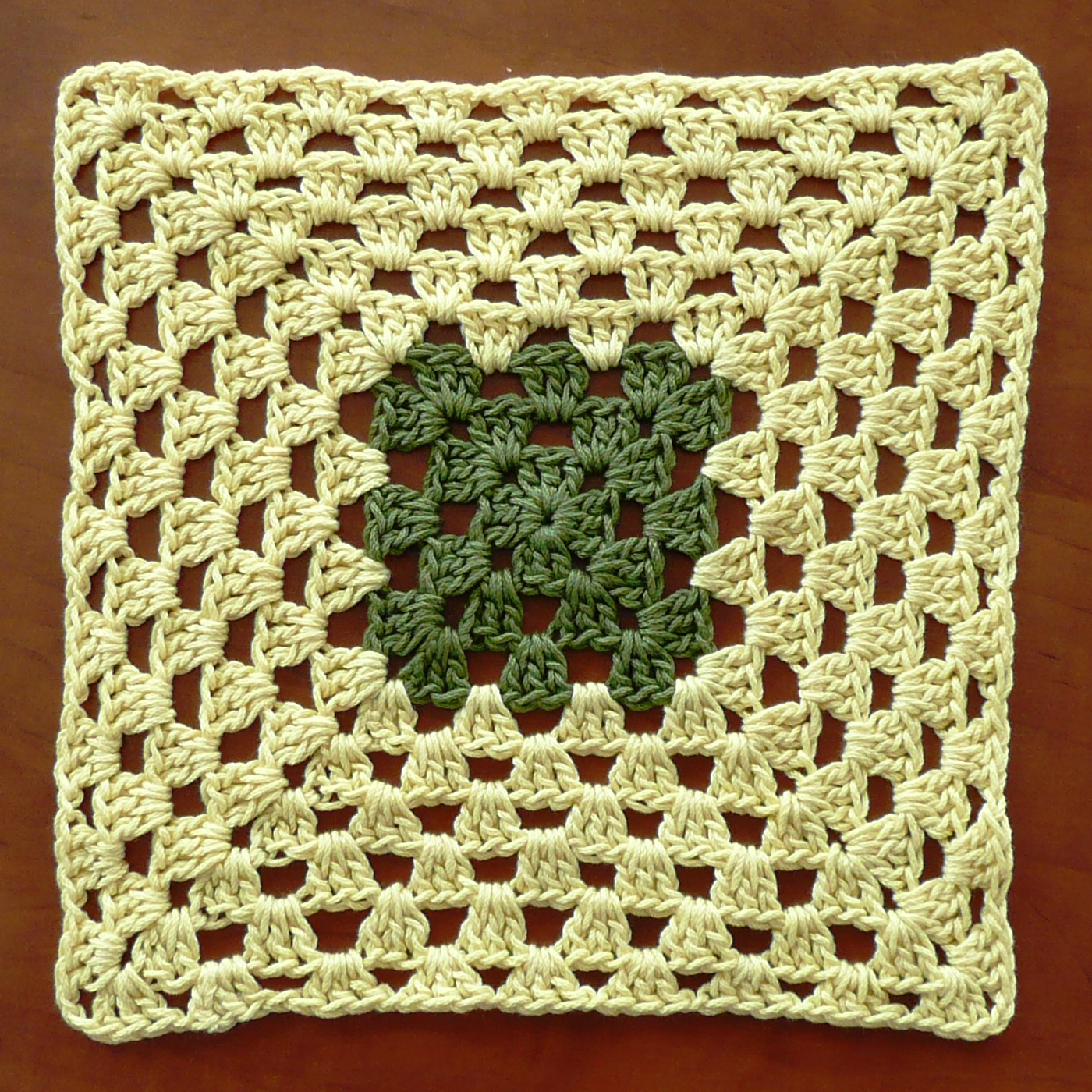
It helps to think of a seamless yoke as a motif.  Ever make a traditional granny square?  In order to shape a square motif from the center outwards you have to jam more stitches into the four corners.  To keep the corners square there are increases at each corner in every round.

Granny Square

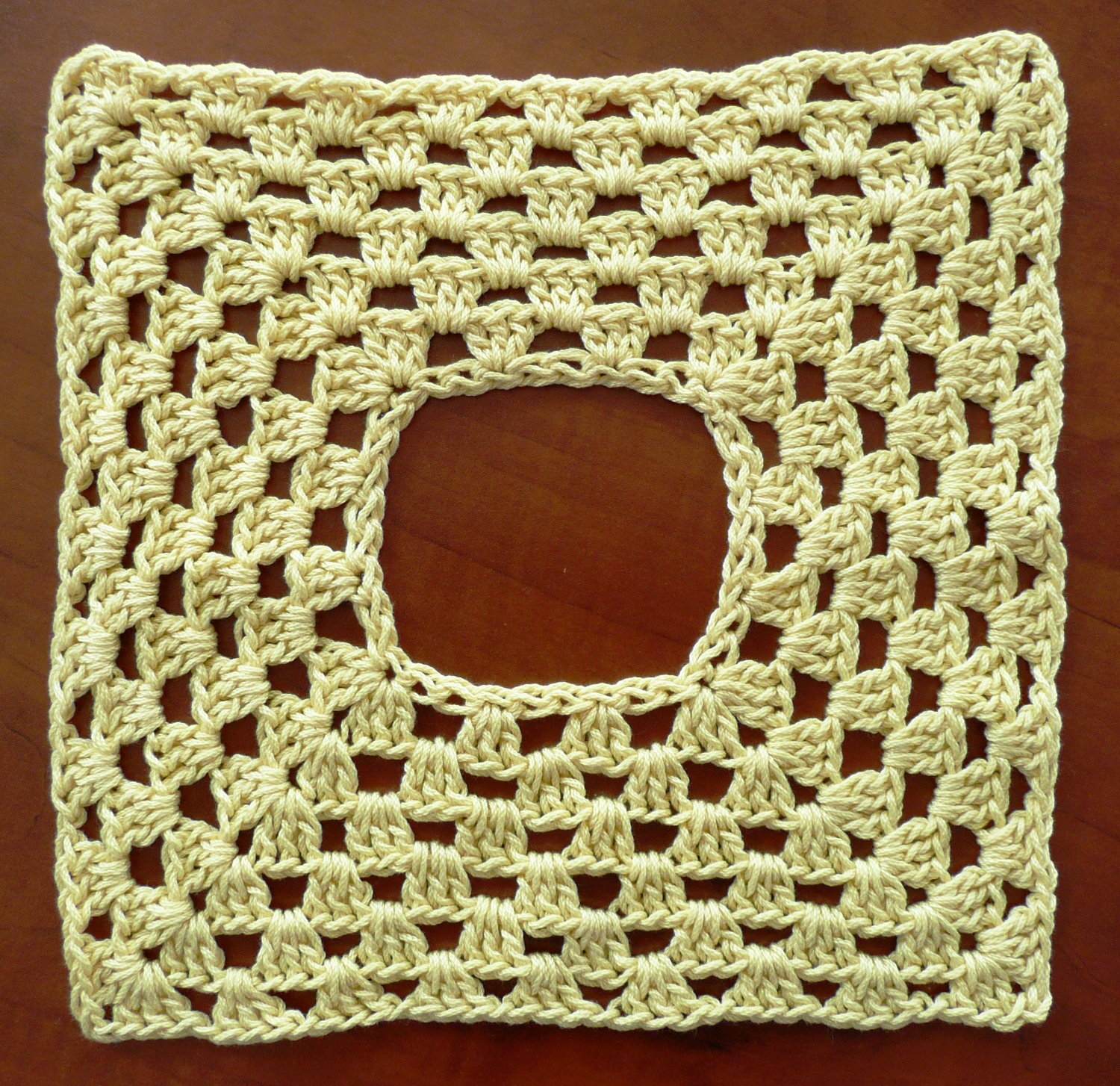
If you scoop out the center rounds and begin the square instead on a round of foundation stitches, you make a square with a neckline.

Square with hole
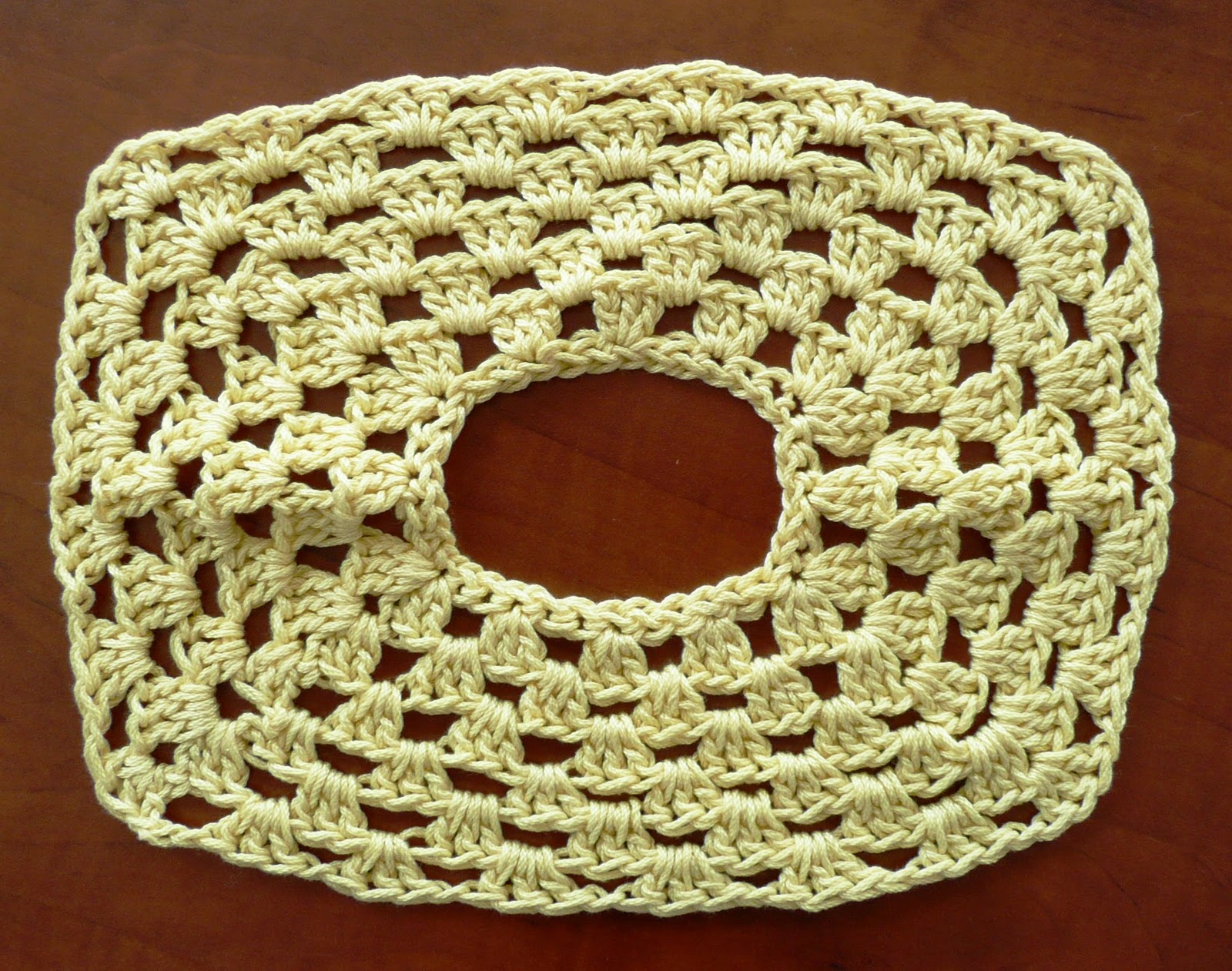
Square yoke

This seamless yoke is still square, with the shoulders sticking out straight like a drop-shoulder T.  Also, the armholes are the same width as the body.  If you think about it, that means for a 36″ bust circumference, the body width of this shape would be 18″, but the armholes would be 18″ as well.

So we tweak the numbers, elongate the neckline to bring the body into better proportion to the armholes.  We also adjust the frequency of the corner increases; more often at first, then less often, then perhaps not at all as the yoke reaches underarm depth.

Tweaked Square

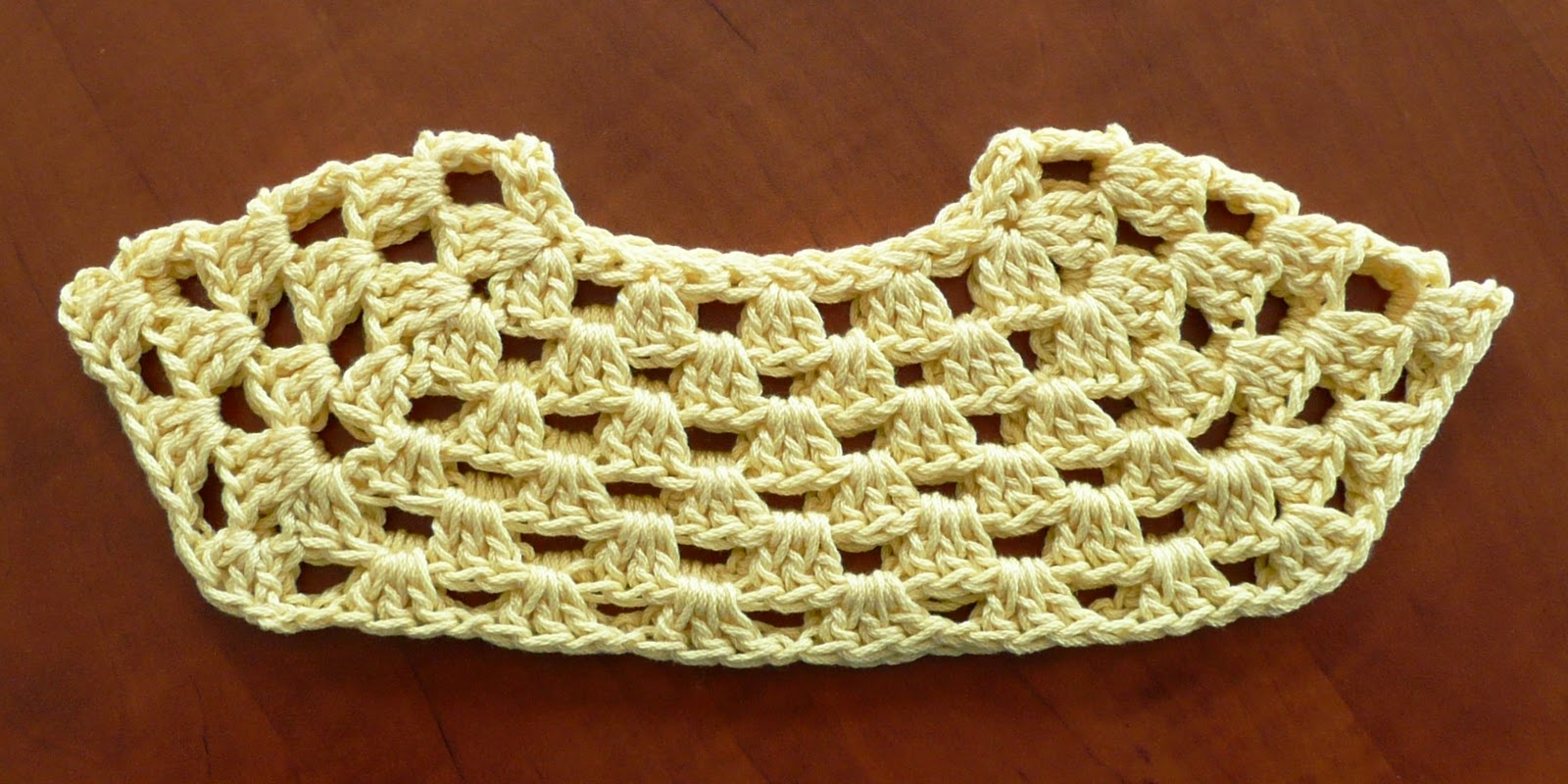
This piece no longer lies flat because you have now created a shoulder slope.

Better fitting yoke

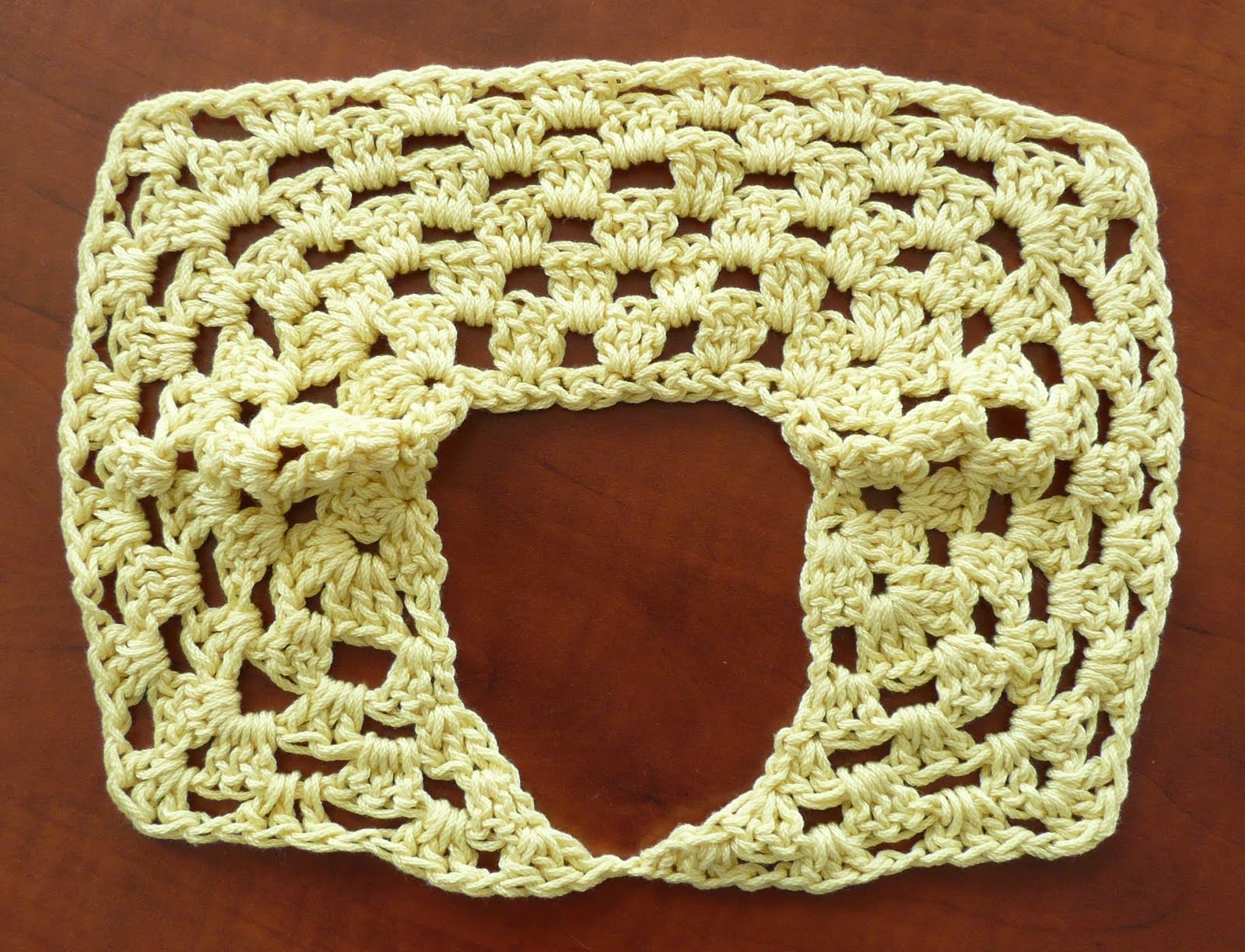
For different kinds of necklines besides round or boatneck, you’ll want to divide the yoke at the front and shape the edges.

Divided front
V-Neck yoke

When you move from traditional granny square stitches to more complex lace stitch patterns, then it gets harder to see the progression.  But the principle is still the same.

Enough to digest for now.  More in the next part.

>Hitting a smaller target: Part 3

>Free-lance crochet design is never a sure thing. Hell yes, I still get rejections.  But I keep plugging away at it because I can’t NOT do it.  If you love to crochet, keep your day job.  No matter how creative, innovative, or brilliant your crochet designs, don’t count on getting rich as a crochet designer if your heart’s desire is to nest at home in your piles of yarn and periodically send out designs, samples and patterns.  Even if you score a few book or booklet deals, the income you can expect from being a professional free-lance designer and author will barely support the activity.  You may earn yourself a rabid, dedicated fan base {hey, guys!}, but that don’t pay the cable bill.

There are designers with greater aspirations who have built empires through hard work and career versification.  These are the world-class celebrities, the brand-names,  the ones who not only design for publication but also may design for fashion production (a whole other aspect of crochet design), tour, teach, lecture, cruise, podcast, produce videos, become show hosts or crochet experts on TV craft programs, write technical articles and books, write other than crochet books, align with companies, manufacturers and distributors to merchandise themselves with their own yarn and tool lines, lend their names to various promotional activities, monetize their websites and blogs by accepting advertising, heck, some cross over or have always been cross-overs to knitting and are able to tap that vein. Truth be told, they are not rich, either. At least not by way of crochet.

If I were to be completely objective and not my natural reticent self, I’d have to admit that I am moderately successful at what I do, in the context of what one can expect from what I do.  Although I have plans to branch out into teaching, as for those other paths to the perception of greater success, they would probably make me miserable.

It’s funny.  I know squat about fashion, but because today I design garments, through association my work has become fashion. Very few consumers know that I began designing accessories, and have over three dozen published bag designs, more bags than any other category of design I’ve done. All I ever claim to know or do is crochet.  And what I excel at is making whatever you want into a publishable crochet project.  I trustingly and naively depend on editors and yarn companies to tell me what they want, or what they think consumers want, or more accurately, what they plan to convince consumers they want.  I make money creating whatever that is.  In a sense I am a hired gun doing crochet on demand.  And this is OK with me.  I love a challenge.  I enjoy taking my skills to the edge.  After all, I get to nest at home in my piles of yarn and periodically send out designs, samples and patterns!

What’s happening to me now is that I am gradually being prodded out of my nest and it’s scary out there.  I’ve spent years in the pursuit of crochet excellence according to those lessons I learned, driven almost exclusively by editorial demands.  I allowed my design course to be plotted by suits. Sorry for the unfortunate word choice because not every employer is a suit, but I am making a point here. In the tunnel-visioned effort to produce for them doable designs for most of the crochet audience, at the same time balancing plus size fit and flattery with keeping the patterning to a minimum,  I rather lost sight of a few things.  Like, Man, am I out of touch with reality!

One of those things, at first a nagging suspicion at the back of my brain, just last week brought to the front by a few friends’ comments, is that I have neglected the lower end of the sizing continuum.

This is not about the current and amusing efforts by several Ravelry crocheters who have succeeded in scaling down some of my designs to fit babies or teddy bears. That’s so funny and fun that I don’t have the right to either judge or contribute to the activity.

Nor is this about going where I have recently dared to go, girl sizes.  I am testing the waters with the Clarity Cardigan in the Spring 2010 issue of Interweave Crochet and coming this fall a skirt for NaturallyCaron.com.  I will let you know how that’s working.

What I am hearing is that there’s a population of smaller sized adults encountering fitting issues with some of my designs.  I didn’t see this coming.  Using the same yarn, working to perfect gauge, making the smallest size and whatever adjustments for length or shaping are offered in the pattern or devised by the crocheter herself, the women are still swimming in their resulting garments.  In my books I have suggested that, for a more body-conscious fit you should make the size where the finished bust measurement of the garment is less than your body bust, resulting in negative ease.  Negative ease is not the same as tight.  It means taking advantage of the stretch and drape of relaxed gauge crocheted fabric and asking it to mold to your shape.  What I did not anticipate was that a few women are so off the chart that there is no such option to downsize.

How can I make this fracking thing smaller… that is what I’m hearing. Dang it, but I’m not going to leave tiny bodies out of my chief MO (modus operandi: method of operating). They deserve to get a good fit too, even though we may secretly envy and despise them and wish they would stop posting images of their skinny little selves! I thought of a way to publicly address the problem, but I have to be slightly careful sneaky about it.  I don’t own the rights to many of these designs so I can’t just make changes to the originals and pass around new versions.  I also have no way to go back, revisit and re-write any of the published patterns that do belong to me, not even the ones in my books.  I will be allowed to make small corrections if and when my books go into future printing {like that’s gonna happen}, but for changes of any magnitude there can be no do-over.  Be assured you won’t leave this series empty-handed; in the following installments I will offer concrete tips and advice on this matter.

Before I can help you deconstruct my MO, I need to delve into the reasoning behind my peculiar style of seamless design.  This is something you must understand before you try any radical alterations.  My design story may prove enlightening for all who attempt to crochet this way, not just for seekers of small-size adjustments, so please be patient and come along.

Doris designs begin with yarn, always yarn.  I can propose, or an editor can suggest/demand, what sort of garment is needed for such and such an issue of a magazine, and we can reach agreement on an overall silhouette or impression, (for instance a fall/winter cardigan with 3/4 sleeves and collar), but that is an intellectual exercise, a step in a particular direction.  A wish.  For it is the yarn that tells me what it wants to be.  Happiness is when the editorial vision matches the desires of the yarn sent.  Agony is when the yarn refuses to cooperate and become the design it’s earmarked to be.

How does yarn speak?  How do you know when the design is right?  It’s like how you are sure you like dark better than milk chocolate.  How you feel better wearing blue and not rust.  How to tell if you are in love.  You just know.

Listen for the voice.  I pull an end from every skein and roll it between my fingers to assess the properties of thickness, density, roundness, twist and texture.  Do not rely solely on the hook/gauge suggestions or weight/yardage and fiber listings on the yarn label, or the wpi (wraps per inch) info to tell the whole story.  Your experienced fingers can gather more information about that yarn than anything you could read. This is the beginning of hearing the  yarn speak.

Each yarn has one optimum gauge for my purposes of top-down seamless lace garment construction.  A bit of tinkering and experimentation (some call this swatching, but what I develop is not your usual swatch) will soon tease out of the yarn what this gauge should be. The choice of yarn therefore is of such incredible overriding importance because the yarn totally dictates the gauge, that gauge helps determine which stitch pattern to use, that stitch pattern creates the fabric, that fabric is what makes the garment work.

I am not insisting that there is only one gauge and one way to use a particular yarn.  All I am saying is, for my very particular method of design and for each specific project, a yarn will tell me where it is happiest.  Once the piece is finished, blocked and put on the body, if you’ve been listening all along, that yarn will show you its greatness, how it behaves, moves, breathes, drapes and yes… you will hear that yarn sing.

It is an organic way of working that may seem at odds with the cherished notion that you can swap out yarns as desired.  Technically, you can’t and expect the same results. I can’t just plug and play.  The thing that I crocheted was grown from a chatty skein of yarn, using my hook, my personal tension and overlaid with whatever mood I was in at that moment in time. I am not saying that yarn substitution is inadvisable.  Far from it.  I am a champion of crocheters’ prerogative.  But be prepared for the distinct possibility that the result might not be the same as mine.  If you can go with that, then by all means, use whatever  yarn you please and love it.

Do you begin to see why sizing organic designs to span as much as 20 inches difference in bust circumference might be problematic?  If that yarn is singing, you don’t want to mess with the magic.  On the way to developing my current MO, I explored other, easier methods to achieve varying garment sizes.  I have on occasion called for changing hook size, which alters the gauge and changes the fabric, hardly ever for the better.  Smaller sizes use a smaller hook and get tighter fabric, larger sizes use larger and larger hooks and get looser fabric.  I could take that shortcut every day and be home for dinner.

I have also tried adjusting the main stitch pattern to get a wider repeat; I have tried adding rounds to a basic motif to get bigger and bigger building blocks.  Solutions like these do not essentially change the fabric.  But you gotta know that in organic design everything is connected; seemingly simple adjustments can reverberate and screw up the garment proportions to the point where entire separate sets of instructions (and diagrams, and schematics) are required for each size.  I once designed a motif tunic where the patterning topped 8,000 words.  Nobody wants such bloated patterns.

Stubbornly, obsessively, I insist that every size enjoy the same perfect fabric throughout all the interior stitch manipulations necessary to achieve seamless top-down shaping for as many as six different sizes, all of which should have correct proportions. Even in the best case scenario, when the stitching itself is comparatively simple, the written pattern is invariably a nightmare for me and for the crocheter.

While I am here, a sidebar: Why stop at 2XL?  That is a cruel joke on the truly plus-sized audience.  For sizes up to 5XL and 6XL there is little hope of being included in traditional fashion crochet publishing.  A few brave crochet and knitting authors and publishers have offered collections of plus size only garments, where the sizing begins at Large.  Without the need to cover the small end of the range, the designer can build plus size proportions from the ground up. Instead of being the afterthought, grudgingly tacked on at the end of the process, this group becomes the focus.  It’s the sane way to serve this segment of the audience, in the same way there are specialty clothing lines and shops for plus sizes.

However, from the viewpoint of a designer and author, plus size only patterns and books are a tough sell and I leave it to braver souls to go there.  Not only is there industry reluctance to provide photography with larger models (BTW, that means a size 14), but there is the assumption (possibly correct) that such targeted, specialty publications will never sell as many copies as more general interest ones and the return will never be worth the investment.

The logical venue for all such specialty products is, as many readers are already thinking and saying, self-publishing.  I am constantly fielding the question from fans, “Why aren’t you selling your own patterns?”.  The short answer is, “I am a crocheter, not a publisher!”.

But what about the All Shawl?  Okay, that is a self-published pattern of mine and honestly, it sucked the life out of me to produce.  It has been hosted at Ravelry for nearly two years and to date has racked up an impressive 20,000 downloads.  But it is a free pattern.  Did I make a ginormous mistake by not putting a fee on it?   If I had charged one dollar, or even just a quarter per hit, you might think I’d be raking it in.  But you might be wrong.  For free, everyone will come.  For even a tiny price, many will choose not.  So the All Shawl is and will remain a free download (see link on left of page).

You might insist that what I am doing right now and what I am about to offer here soon could be considered self-publishing.  Not to duck the issue, but pardon me while I collect my thoughts and get back on point (thereby ducking the issue!).  I have one more piece of my MO puzzle to discuss in the next installment.  Then the shrinky-dink fun begins. 🙂
>Hitting a smaller target: Part 1

>Disclaimer: The following is some more crochet tech talk.  It may at first appear to be mostly harmless wingeing about poor, poor Doris, the long-suffering crochet designer.   It will be not-such-good reading for many casual visitors.  I beg your forbearance and promise that, eventually, through this first and the next installments, there will be a happy ending and a really excellent point to it all.


CYCA sizing guidelines for women

This, my crochet friends, is the sizing bible, the listing of standard body measurements suggested by the Craft Yarn Council of America, and for better or worse, it is the guideline for crochet designers who wish to have their work published in traditional print venues (books, magazines, pamphlets, yarn ball bands).  The CYCA sizes are graded in precise four-inch increments for bust circumference.  We are admonished to follow the size ranges and as accurately as possible state the kind of fit that the garment style offers (loose-fitting, standard-fitting, body-conscious, etc.).   On paper it looks tidy.

We all know for a fact how widely the sizing can vary among commercial clothing manufacturers.  I can’t begin to tell someone what my size is without listing all the exceptions.  Well, I am sort of a size 6 for tops but not bottoms.  I am sort of a size Small, but only if Small means 6-8.  If Small means 4-6 then I am a Medium.  But I like my T-shirts tight, so I sometimes wear XS if that’s a 4, but not if that’s a 0-2.  But I am also a Petite size being 5’2″, but only in tops in body (waist) and sleeve length, because some petite sizes also have narrower shoulders, too, which I don’t require.  I can sometimes wear Junior size 7 (and Big Girl Size 14 or 16!) but  it depends on the cut.  I am a Petite in skirts, but not always in pants because petite pants are sometimes too shallow in the rise, so it depends on how low the waist should fall.  If I go by my waist measurement I am a size 10 pants.  If I go by my hip measurement, I am a 4.  Go figure.

The more I can coax women (usually it’s only your closest friends who will share this level of personal information) into revealing their sizing issues, the more I understand that nobody is a perfect off-the-rack size anything.  So here’s the terrible truth, nobody is a perfect off-the-crochet hook size, either.

And that is why I started designing the the things I do in the way I do.  I could not get a good fit nor a nice fabric (I so suck at sewing crocheted pieces together that I began insisting on NO-sew construction) by following patterns that existed.  With departures so radical from what was written, I discovered I was, in essence, creating my own designs.

I get it.  Honestly, I do.  There have to be some standards and guidelines for knitting and crochet so we all have a common basis and speak the same sizing language. But standard size patterning only works if you posses a standard sort of body.  Nobody has a standard body.  Every body is unique.  So, although this set of guidelines is useful, it does not tell enough of the story about fit, garment ease and drape.

And the other, even more distressing issue is that standard pattern writing and size grading only works if you are doing standard crochet design.  Straying even the teeniest bit outside the box could lead the designer to a world of patterning pain.  Even if by some miracle the pattern adheres to the guidelines, there are still too many things that can go horribly wrong for the crocheter.

To help you see the issues I face every day, here are some of the unsettling lessons I learned:

What sells a design, pattern, garment or yarn to consumers is pretty pictures. Photography for fashion and advertising favors strikingly slim, tall models.  A designer cannot possibly know while crocheting the sample garment what size/shape model will ultimately be chosen to wear it.  It almost doesn’t matter what size garment sample you submit.  The model is always going to be two sizes smaller than the sample, and at least five inches taller than average height.  The stylist will bunch up the excess fabric and clip it tight, hopefully in an unnoticeable place on the model, in order to make a fashion image. Not every shoot goes this way and not every piece gets this much manhandling, but it happens enough that I know the difference.  No one can expect to look that way in her crocheted garment because the model in the sample didn’t even look like that without the “alterations”.

Because I began tinkering with crochet design by making things that fit me, my natural inclination was to recognize a certain set of proportions as correct.  I learned real fast to make my samples (usually the smallest size to be offered in the patterning) both narrower and longer, to the point where they seemed abnormal to my eye, but that’s what was needed. I also stopped working with colors, stitch patterns and yarn textures that don’t photograph well.  Already you can sense a certain reining-in of creativity.

Space is money. Printed page real estate is limited and precious.  There are horrible penalties to pay if your written patterns are longer than the editor deems necessary.  Contractually, you can face outright rejection of the design… or if the design is still accepted and the publication has to incur extraordinary costs for pattern technical editing, you can face having part of your fee withheld.  I have never heard of the latter happening to anyone, but strictly according to some design contracts it could happen.  And, in the course of that red pencil butchery, if your pattern is rendered unfathomable, you the designer have no say in the matter and no recourse.

Don’t get me wrong.  I appreciate and value technical editors more than I can say.  They have saved my butt on countless occasions and their changes and suggestions are usually right.  {GEEZ, it hurt me to say that} Interweave Crochet and Caron International are two of my employers who now routinely ask me to review pattern edits before publication.  I totally appreciate the opportunity.  But that does not always mean there is either agreement or joy in the process.

Plus sizing is now a reality of crochet design, not an option. It was not so long ago when pattern drafting was way easier.  Just look back at knit and crochet patterns in magazines and books from a couple of decades ago.  Three sizes were the norm.  Small, Medium, Large.  And remember, American clothing sizes went through a reality check in the 70’s.  I am right now looking at a  crochet booklet from 1965 where the body bust for size 10 is 31″, size 12 is 32″, size 14 is 34″, size 16 is 36″, size 18 is 38″.  Or look at vintage patterns from the early part of the 20th century where no sizing information at all is given.  No gauge, either.  Even today some high fashion designs and in particular, garment designs originating from outside the US are offered in only three sizes.

Without question, the plus size range of the crochet market has historically been ignored or under-served.  I do my best to extrapolate patterning for body bust at least 48″ in the designs where it is feasible and/or desirable.  But you gotta know that if it is in mind that I will eventually have to write the pattern to include sizes up to 2X or 3X, I find myself avoiding or abandoning design ideas that are too difficult to enlarge, too outside the box to hit the standard sizing guidelines, or would take too much real estate to explain stitch by stitch how to do for plus proportions.  Can you sense more reining-in of creativity?

That’s enough for today.  In the next installment I hope to tie this stuff together and make a point.