Art Imitates Crochet

When you spend most of your adult years running as fast as you can just so you don’t fall behind, it is too easy to lose touch with your childhood and allow your earliest friendships to slip away.  I have gone through the usual life changes and even re-invented myself a couple of times, all the while never looking back.

Something made me attend my 30-year high school class reunion.  Actually I know what that something was.  Blame in on the net.  Not long after I finally got internet access and began my first tentative on-line forays I did an uncharacteristic thing.  I searched for and found schoolmates and through them discovered the plan to throw a reunion bash.

I had been warned against high school reunions.  The prevailing attitude was that if you left certain friends behind then there would be little to no chance that they’d have any place in your current life. Suzanne is my brilliant example of the exception that proves the rule.

We became nearly immediate friends at the beginning of 7th grade in  junior high and continued to be mates and co-conspirators through high school graduation.  Suzanne “Spidey” Halstead (nee Hausmann) and I shared great times, many involving music.  We trod the boards acting and performing in plays, musicals, talent shows, concerts. I dug up these images, not our biggest or best roles, but they are the only pictures  I have of us. OK, so it wasn’t High School Musical or Glee, but it was fun.
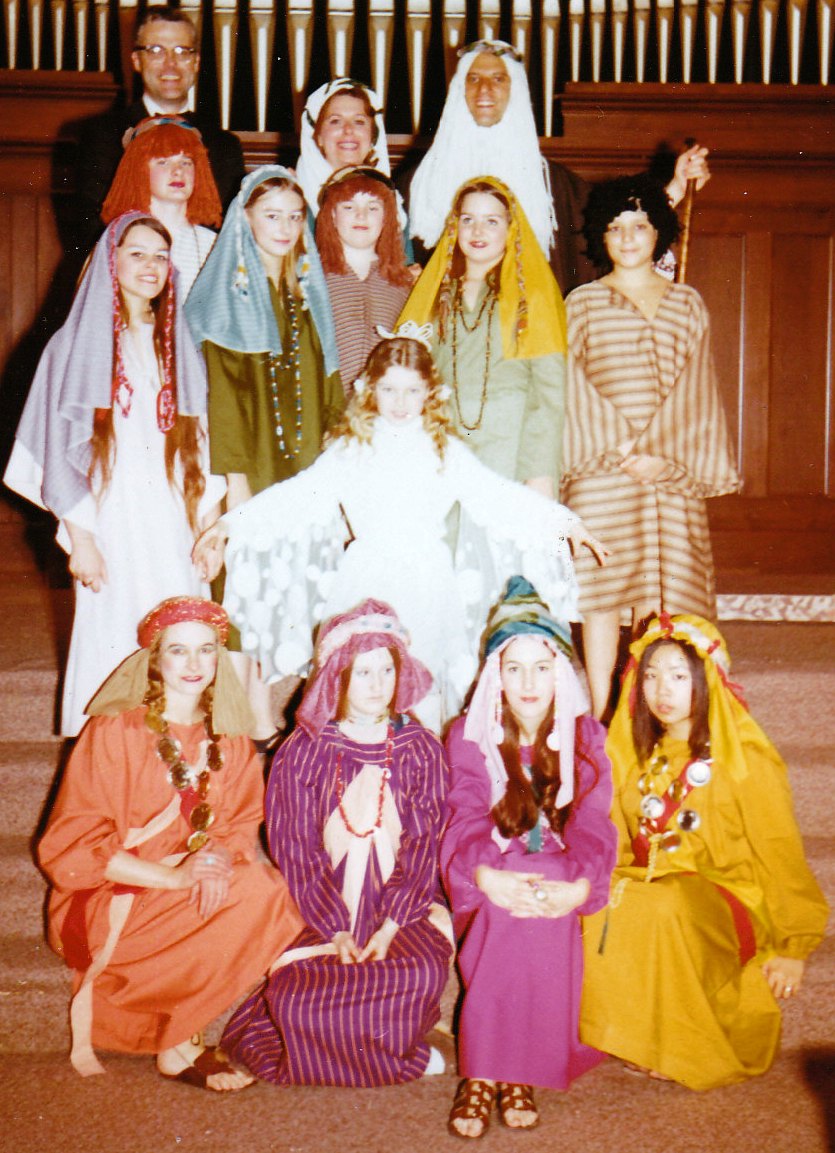
Bottom row, that's Suzanne second from the left, me on the right end.
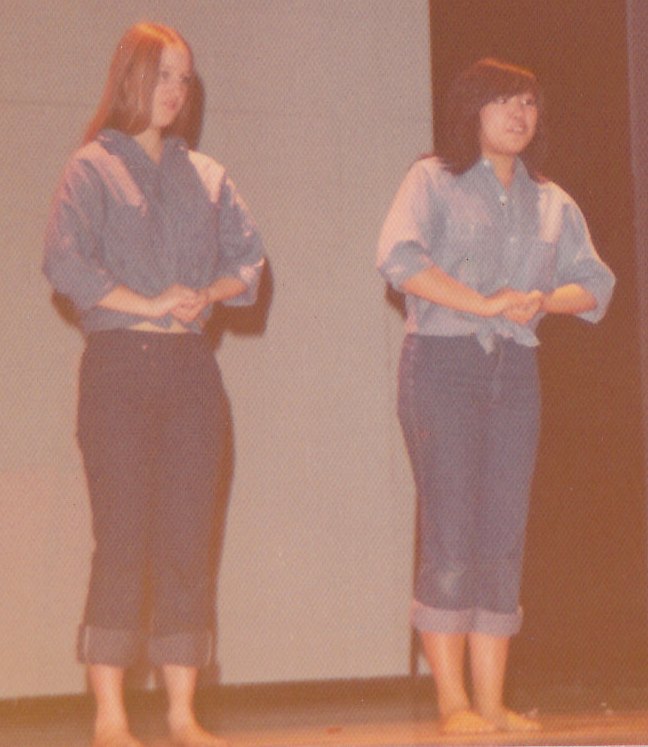
Suzanne and me, senior year talent show

Suzanne was my designated vocalist for the first and only public performance of a song I wrote, which I couldn’t sing myself while playing the keyboard.  That experience taught me that I shouldn’t play piano or write songs either.  Really.  But she was terrific.

Fast forward to today, where Suzanne and I have reconnected after all this time.  As completely different as those intervening 30 years were for each of us, we found much common ground. Happily we live close enough to each other to meet regularly for coffee and decompression at the mall.  (Neither of us likes the mall, but the location is convenient.)

Although I count many many crochet confidantes and good friends in my life today, all are unconnected to my life B.C. (Before Crochet)… that is all  except for Suzanne, who was there while I trembled on the brink of this new career as a crochet designer. I like to think that we both have artistic souls, me in my yarnish way and Suzanne as a real artist and art educator. Over the past years since the reunion we’ve swapped craft for art; I have gifted her crochet shawls and designs and she has presented me with her artwork, oil pastels, paper, prints and… well… art stuff.
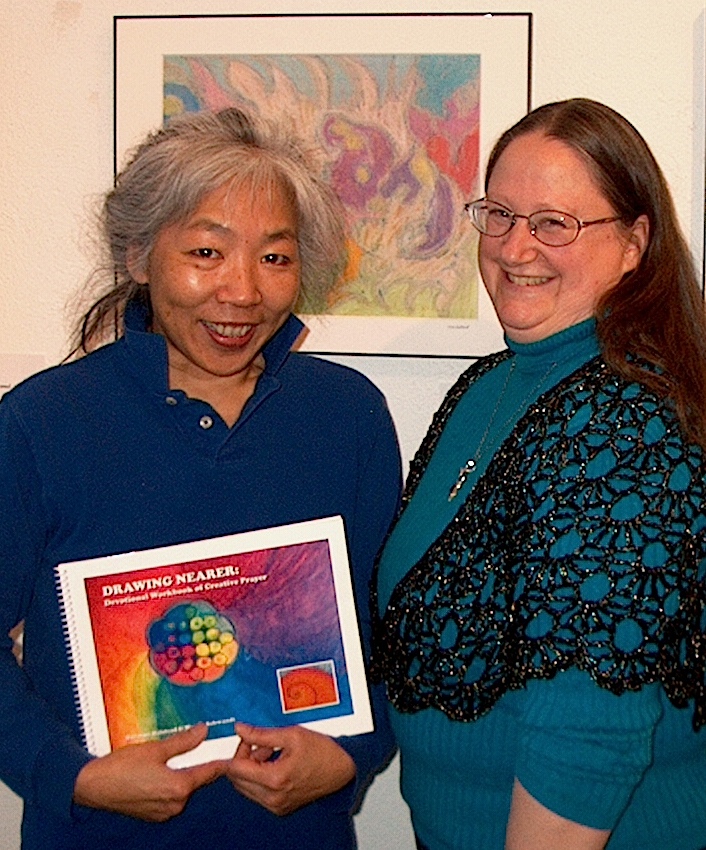
The need to earn a living had constantly trumped her desire to do her art. Only recently has Suzanne the artist blossomed in a beautiful way.  Last week I had the pleasure of attending a reception celebrating her first gallery showing, an exhibit of many of the oil pastels published in her inspirational book project, Drawing Nearer.

Why I treasure Suzanne so dearly is not simply because she is a wonderful, talented and true friend but, because she is not of my crochet world, she can put everything I do into a different perspective, specifically into the perspective of an artist.  For example, in 2008 she gave me this oil pastel for my birthday and asked me to describe what I saw. My first impulse was to hold it this way:
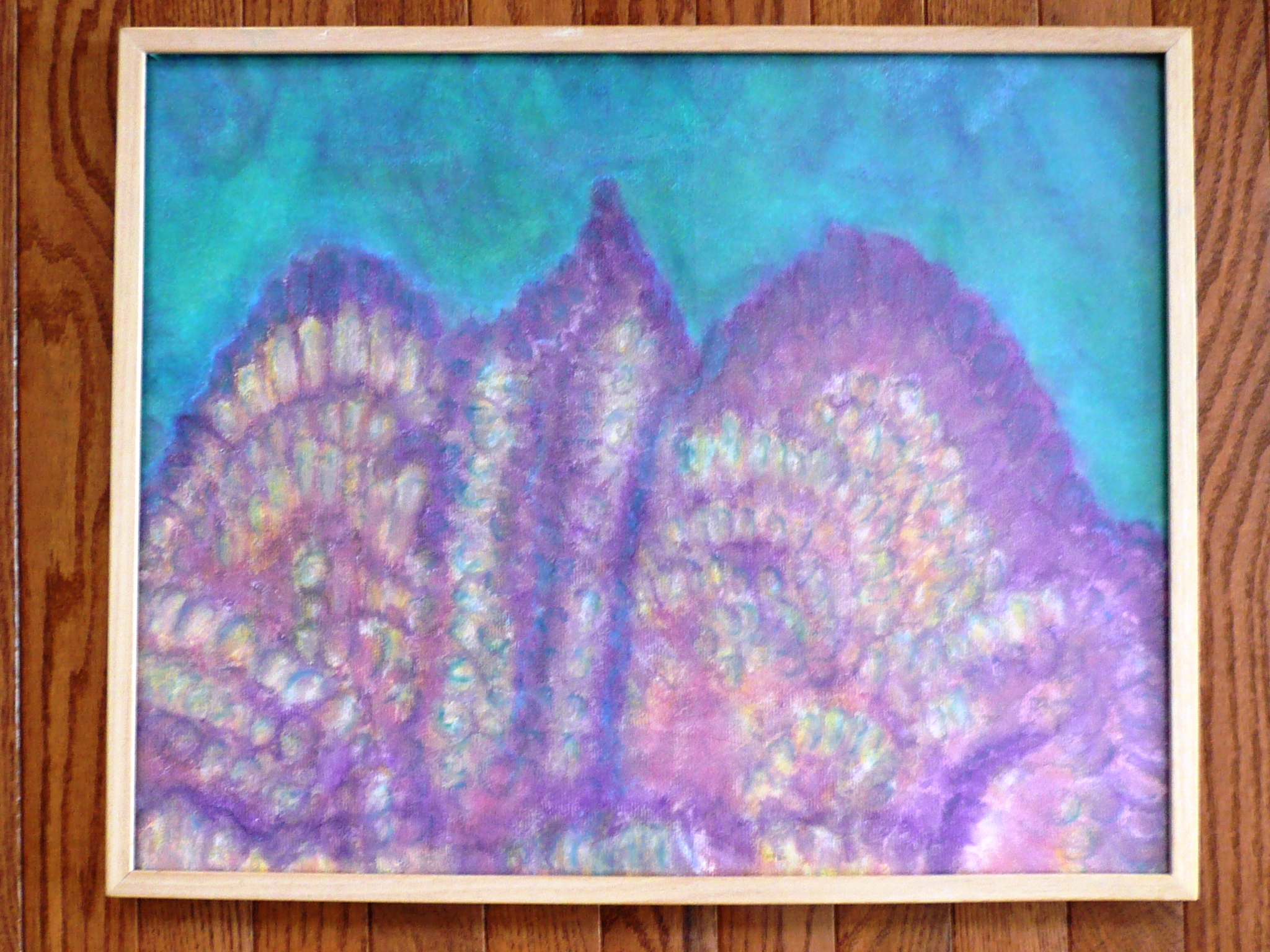
In my geeky space cadet way I thought alien landscape or deep sea scape, post-apocalyptic city scape, purple mountains majesty.  She gently suggested that I turn it around to look like this:

Now I saw the Carina Nebula.  Stalactites.  Living alien ships.

Suzanne will be the first to assure you that the meaning of art resides solely in the eye/mind/heart of the beholder and that any interpretation is valid.  However, when she explained what she was thinking about when she created “Patterned Light”, I had to bust out laughing.

This is an homage inspired by and representational of the way in which the light from a window plays through the fabric of her favorite window valence.  Which happens to be one of my crocheted shawls. 🙂

Gotta love her.

However,  I will continue to see the Carina Nebula.

That… or a girly Romulan Bird-of-Prey.
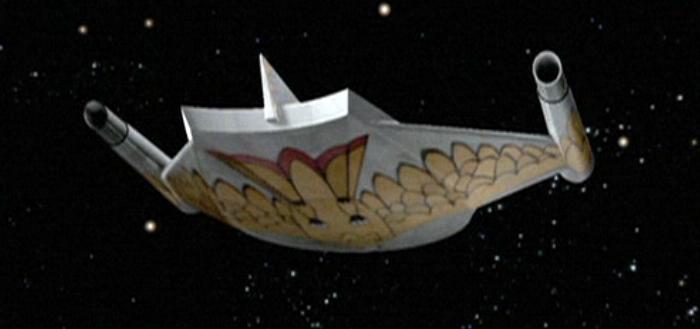
I am such a geek.
 

Foundation and Crochet

Foundation Single Crochet, that is.  In the years since I began using the Fsc as an integral part of my designs, I’ve worried about why many who try the Fsc are having so much trouble with it. I might be part of the problem.  Here I hope to be part of the solution.

I do not claim to have invented this technique.  The chainless foundation has been in use forever as one of the wonderful things you could pull out of your crochet bag of tricks if you knew about it.  But I had never seen the Fsc specifically written into a pattern, even when the design would have been greatly improved by its inclusion. There was an incredible amount of editorial resistance in 2004 when I first dropped the Fsc bomb in my own design patterns.  Resistance proved futile. 🙂 Resistance also equals V/I, depending on what sort of post you think you’re reading.

At the time there was no standard published name for the technique. In the vacuum I gave it my own title (no, I did not name it after myself), Base Ch/Sc, because it makes a base chain and a row of sc in one pass.  I did not want to use the word foundation in the name because to me a foundation row is the first pass of the actual stitch pattern which sets up the repeats upon which the fabric will grow.  After a bit of scrambling among the members of industry’s elite corp of technical editors, one generally accepted title prevailed.  This method of the chainless beginning of a piece of crochet is now known as Foundation Single Crochet.

The Fsc is one of many chainless foundations, elegant solutions to the problems inherent in the traditional chain start.  I’ve written extensively about the beauties of foundation stitches, but haven’t addressed the major angst it has engendered among newbies to crochet and to the technique.

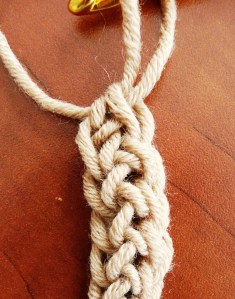
One of the important aspects that I never thought to mention because it seems so obvious while you are crocheting it is that it comes out upside down. It has the feeling of making a long, skinny strip that is one stitch wide, and for those who are familiar with Tunisian crochet technique, it resembles the way the edge stitch is worked as you begin a return pass in TSS.
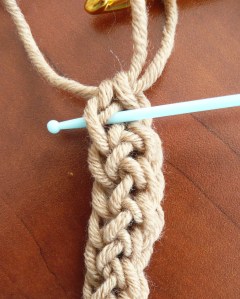
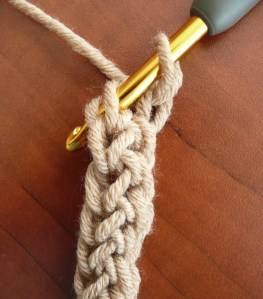
The sc as you make them will not present themselves as a horizontal row going from the hook back to the start of the row the way normal rows look.  This foundation will hang  down from the hook, with the “chain” edge running on the forward side (in the direction of your work, to the left if you are a righty, to the right if you are lefty) and sort of on the top. The “sc” edge is running behind the hook (back from the direction of your work, to the right if you are a righty, to the left if you are lefty) and sort of on the bottom of the strip.

Keep your eyes on the “chain” step of the Fsc.  I tell people to physically grab the chain after you make it; pinch it and keep it relaxed and open so you can 1) find it for the following Fsc, and 2) work into it without struggle.

Here is where some confusion has been generated. The “chain” edge of the foundation is on top and to the left.   Working into the “chain” of the previous stitch under two strands means that you insert the hook so that two strands stay on top and to the left.  You need those two strands to run across the “chain” edge of the Fsc to form the sturdiest, most elastic foundation.

So, in case you’ve been looking for an overwrought, obsessive account of how to do this useful technique, I’ve excerpted some stuff from my DJC Designs pattern, Birthday Girl skirt.  It is written specifically for the beginning of a top down skirt, however the information can be generalized for working other types of projects in rounds (like top down sweaters) or worked flat without connecting into a ring.
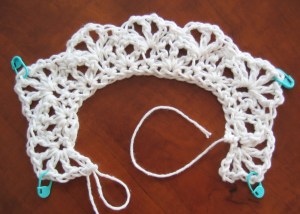
Fsc (foundation single crochet): This creates a beginning row of single crochet, each with its own chain at the bottom, for a sturdy, elastic foundation.

Start with a slip knot, ch 2, insert hook in 2nd ch from hook, YO and draw up a loop, YO and draw through one loop on hook (the “chain”), YO and draw through 2 loops on hook (the “sc”).  The following stitch is worked under the forward 2 loops of the stem of the previous stitch (into the “chain”).  *Insert hook into the face of the “chain” and under the nub at the back of the “chain” (under two strands), YO and draw up a loop, YO and draw through one loop (the “chain”), YO and draw through 2 loops (the “sc”).  Repeat from * for the length of foundation.

— To work with Fsc as a ring, let the foundation hang vertically from the hook, with the sc edge running down from the last loop on hook (on the right if you are right-handed) and the ch edge running down the left.  Making sure the foundation is not twisted, take the lower end (beginning end with the tail) and curve it up to meet the hook, with the sc edge on top, sl st in the beginning sc to form a ring.  With the sc edge of the ring now on top, do not turn, start with first round of stitches.

— This foundation has height.  You have connected the stitches at the sc edge, but the ch edge is not yet connected.  Eventually, whenever you get to it, at least before you go back and put the waistband on the skirt, thread the beginning tail onto a yarn needle and loop it through the last ch of the foundation to close the gap, weave in the end.

There is one other caveat I can offer that might relieve some aggravation.  In many of my top-down top designs, the foundation will not remain flat or straight.  Don’t be upset when it becomes curved after laying on the following rows of stitch pattern.  It is suppposed to curve.  By squeezing more stitch pattern onto fewer foundation stitches you are giving a jump start to the increase shaping of the yoke and are on the road to creating the shoulder bumps that fit so nicely.

Curvy not flat.

CGOA 2011 Crochet Design Competition Update

My friends all know I am pretty much a slug, much happier hanging around here in my pjs than out in the world.  Don’t get me wrong.  I am not agoraphobic.  It’s not a matter of fear of going outside.  It’s about being an at-home crochet designer and having the temperament for flying solo. I venture out only for basic necessities: yarn, food, family maintenance, yarn, toilet paper. So only the most compelling fiber events can coax me out of my nest, chief among them are the Crochet Guild of America conferences.

Although volunteerism does not run freely in my veins, I do stick my neck out occasionally and assume some noteworthy CGOA committee tasks, since most of the work can be done in my pjs. So why should you be surprised that I am taking another crack at running the CGOA Design Competition.

I appreciate that March is National Crochet Month, meaning that special attention is being paid to all things crochet.  That makes this a serendipitous time to post the following announcements, updating the status of the competition and sending love to our sponsors.  The event is six months away, but now is the time to get your crochet mojo on and consider sending us your creations.

CGOA 2011 Design Competition Celebrates (and rewards) Crochet

Be a part of this singular event celebrating the beauty and artistry of crochet, the only competition of its kind.  Thanks to a bevy of magnificent sponsors we have thousands of dollars in cash prizes to award to our winning guild members for the best of the best in crochet design.  With a huge $1000 grand prize plus first, second and third place prizes of $300, $200 and $100 respectively in each of seven judging categories plus special prizes, this promises to be the most rewarding event ever.

Here are the design categories for 2011 and their sponsors as of this writing:

Fanciful Fashion (sponsored by Tulip Co, makers of exceptional tools including Etimo cushion grip crochet hooks and Carry T); fancy adult garments and accessories, including gowns, dresses and evening wear.

Fashion (sponsored by Tahki Stacy Charles, bringing you fine yarn lines Tahki, S Charles, Filatura Di Crosa and Loop-d-Loop); garments for women or men, including sweaters, tops, jackets and skirts.

Accessories (sponsored by WEBS, America’s Yarn Store); wearables including shawls, socks, scarves, hats, bags, belts and jewelry.

Small Wonders (sponsored by Boye and the Crochet Dude brand of crochet tools and accessories); anything small scale, including baby items, toys, amigurimi and small décor items.

Afghans (sponsored by Caron International and BuyCaron.com); any and all afghans, throws, blankets and bed or sofa covers.

Thread Crochet (sponsored by AllFreeCrochet.com and FaveCrafts.com, offering diverse crochet e-newsletters, e-books and patterns); anything made with crochet thread, including doilies, décor and accessories.


Artistic Expressions (sponsored by Leisure Arts, bringing you the art of everyday living); artistic rather than functional in nature, including free-form and mixed media pieces, hangings, sculpture and wearable art.


$1000 Grand Prize, sponsored by Creative Partners (the publishing empire founded by Rita Weiss and Jean Leinhauser) and by  Interweave Press.


$100 Special Technique Award from DesigningVashti for outstanding use of alternate crochet techniques and construction including Tunisian, Broomstick and Hairpin.


$100 Peoples’ Choice Award from the Crochet Liberation Front to be chosen on site by attendee voting.


We are thrilled to welcome this year’s panel of judges: Marcy Smith, editor of Interweave Crochet magazine; Kathleen Sams, ambassador for Coats & Clark; and Drew Emborsky, the Crochet Dude. Judging will take place on location at the CGOA Conference in Greensboro, North Carolina, 21 September 2011 and winners will be announced during the Awards Ceremony on 22 September 2011. You do not have to be present to enter or to win but you will want to be there to marvel at the awesome display of entries and unveiling of the winning designs.

Please use the links provided soon at www.crochet.org to download the complete Design Competition Information package and access the electronic entry form. Deadline for entries to be shipped to the receiving location is 31 August, 2011. Please do not submit a form until you ship your entry in August.

Please frequent our sponsors through the links provided and if you can, let them know their generosity is much appreciated.

For fun you can see the results from the CGOA 2010 Design Competition in this post.  To see winners and images from the CGOA 2009 Design Contest, visit the CGOA page here.  The first such event was in 2008 and not nearly as well organized, but you can see some images here.

Form adds Function: Free Crochet Patterns

UPDATE:  The free patterns are now all gathered on this separate page.  I have to make room in the sidebar for other cool stuff soon.

~Doris

This blog theme really works for me.  It is clean, easy to read, professional looking without being stuffy, and has a few useful doo-dads… thingies… widgets… that help me point you to cool stuff.  Dang it if I could never figure out how to accomplish these things at Blogger.  Could be I didn’t try hard enough there, but if you have to work so hard at something that’s supposed to be fun, what the frack!

So last night I floundered my way through a few WordPress tutorials and discovered that this theme let’s you put a customizable blogroll widget on the sidebar. That would have been gobbledy gook to me a couple of days ago.  I’m guessing that normal peoples’ list of links (blogroll) would include their friends’ blogs, the sites they visit, whatever.  But the blogroll  can actually support any kind of links you want.  HMMMM.

So last night,  more accurately this morning at 25 or 6 to 4, I had the brainstorm to locate, grab and post the links for every one of my crochet designs that is currently being offered as a free pattern download.  While not blogs, these are sort of my friends, huh?

Finding the links was pretty straightforward.  Most of the free designs of mine are from NaturallyCaron.com, crocheted in the yarns Spa and Country, or at the Caron site and done in Caron Simply Soft.  A few are from Lion Brand Yarn (be advised that they make you sign up and sign in before you can download the goods).  Other sources are Tahki, Coats, Craft Yarn Council of America, Knitting Daily TV, Michaels and Ravelry.

What was not so simple was providing the images in the right sizes.  This is what has taken me all day today.  And even though I’ve stopped obsessing over these images, it still bugs me that I can’t get them all the same size when they’re running down the sidebar in a line. Guess I’ll have to go ingest and digest another tutorial before it’s looking perfect.  Yeah, right.  In another life…

Meanwhile, please help yourselves to the free patterns linked through my shiny new sidebarblogrollwidget.  And while you are surfing around the net, if  you spot any more of my work that’s a free pattern, drop a comment to this post and let me add it to the pile.

One more thing.  The best way to view ALL of my crochet designs in one place is Ravelry.com, the awesome free site for all fiber arts. Simply join Ravelry if you aren’t yet a member, and connect with me there (dorisjchan).  What you want to view is Doris Chan Design Pages.

Thanks and enjoy!

Link

>Have I mentioned that one of the perks of being a crochet designer is that I never have to match any other crocheter’s gauge?  Given that I design the project, make the sample garment and write the pattern, I am allowed the luxury of setting the gauge.  I never realized how empowering it has become being the one to dictate the number of inches per a specific count of stitches or stitch pattern repeats.  It tends to make one unspeakably smug and self-righteous.  Can’t match my stated gauge using the exact same yarn?  Too bad.  Want to substitute another yarn?  Good luck with that!

All of it, every single fracking hubris-laden moment of my designing career, has returned to bite me in the butt.  This month I have promised to release the next design for my independent pattern line, DJC2: Tank Girl. I started working on Tank Girl not that long ago while the Northeast was still in the grip of stinging winter cold, snow and ice. At the time it seemed like a good idea to offer Tank Girl in a warmer, cozier fiber as a layering vest.  So the design began with the wonderful yarn in hand, Spud & Chloe Fine, a fingering weight blend of superwash wool and silk  that probably makes awesome socks, too. And, for fun, I also sampled a tank in Kollage Sockalicious, which is a softer, plumper yarn but worked perfectly to the same gauge.

Sample in DMC Senso, fine gauge

The universe being what it is, a gang of cosmic forces kept me from completing Tank Girl right away.  So now the seasons are threatening to change and think I should switch gears, stay ahead of the curve and make my tank samples more spring/summer-like.  I tossed the stash looking for substitute fingering weight yarns in cotton or blends with cotton, linen, bamboo, whatever would work to gauge and be kid-friendly, washable and durable.  I discovered that there aren’t a lot of choices for comfortable, easy-care yarns in this weight class, at least not to be found in this house.  So I amassed a few that came the closest and swatched them all.

Imagine my dismay when none of my intended swaps would work to gauge, partly due to the fact that wool and animal fiber yarns have some give or stretch, whereas cotton and other plant fibers have none. Also, most animal fibers have some surface texture and stick-to-itself qualities that many plant fibers do not. Whatever the reasons, I found I could get the cotton/plant yarn swatches to match either stitch gauge or row gauge but not both.  I switched hook sizes.  I switched hook styles.  I wound and rewound balls in case the tension off the skeins was making any difference.  I cursed, I prayed. I did everything except crochet standing on my head and still I could not get any of the non-wool, warm weather choices to match my own gauge.

What I swatched:

  • DMC Senso, a soft blend of microfiber and cotton that is listed as a Size 3 crochet thread.  Not a thread, trust me.  It is a lovely fingering weight yarn and is terrific for fashions.
  • Aunt Lydia’s Size 3 Crochet Cotton, not as soft but workable.
  • Red Heart Lustersheen, a cabled acrylic fingering weight, very soft, a better color range than the cotton threads.
  • Elsebeth Lavold Hempathy, a sportweight blend of hemp, cotton and rayon; not as fine as the above, but would make a terrific spring tank.
  • Tahki Cotton Classic Lite, a sportweight mercerized cotton in awesome colors, but a touch heavier than all of the above.
DMC Senso, Spud&Chloe Fine, Tahki Cotton Classic Lite Swatches

I also tried a few fingering weight yarns that I’d be loathe to use for kid wear.  Fine gauge silk and fine gauge linen. Still no joy. Looking at the swatches this way, it doesn’t seem as though there’s much difference, but when the gauge is multiplied over the width and length of a garment, it really gets messed up.

Tahki Cotton Classic (pink), Kollage Sockalicious (blue)
Elsebeth Lavold Hempathy (green), Spud&Chloe Fine (pink)

My solution?  Heck, if the yarn won’t come to the gauge, then re-tool the gauge to fit the yarn.  This would not be possible in traditional pattern publishing where space is a limiting factor.  We don’t worry about word count in download land, which leaves me free to offer as many sets of instructions in as many gauges and variations as necessary to cover the bases for the range of yarns you might want to use.

It’s going to be a crap-ton of work, but worth the extra pages, trust me. Barring any unforeseen shifts in the universe, you should be able to find DJC2: Tank Girl, a seamless, lacy layering vest sized for girls, tweens and teens, in a couple of weeks at www.designingvashti.com.