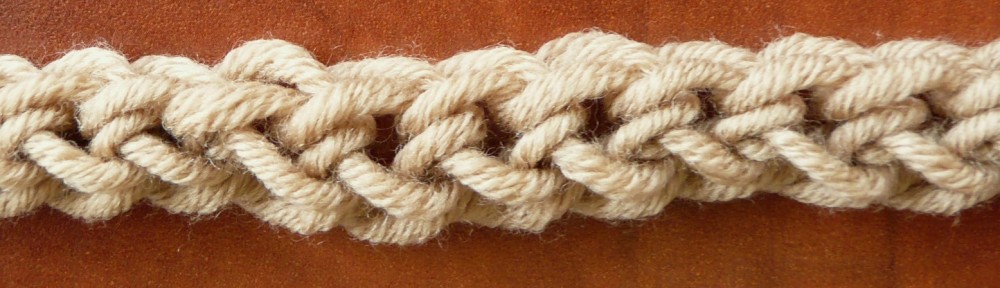
The Crochet Twist

Many times I have been asked to name my favorite yarns.  My answer, after considerable waffling, is always “well, it depends”. Do you mean what are the yarns I most enjoy using or which ones do I love for my own personal crochet? There is a difference.

Yarn is not only my passion, the stuff of dreams and stash, but as a professional crochet designer yarn to me is also the single most critical aspect of my work, an aspect over which I have zero control. You may not know that the yarns and shades used in the designs you see in crochet magazines and books are not necessarily chosen by the designers. For reasons not always apparent or transparent, yarn choices are made by or at least subject to the approval of the magazine or book editors, take it or leave it, like it or not.

That makes perfect sense to me.  Over the years I have learned to be flexible about materials for design and that has served me well.  Not only has it created for me a nice little  niche in the crochet publishing pantheon, but it has also given me the opportunity to handle yarns I might never have experienced. It is my job to make any yarn my employers throw at me look good in crochet. I have created hundreds of garments and accessories with everything from indifferent craft acrylic to luxury cashmere, in every weight from lace to super bulky.  I maintain that every yarn deserves good design. Even if it takes extraordinary effort, long nights of yarn whispering, cajoling and tussling, eventually every yarn must speak to me.

I know this sounds like a cop-out, but honestly, I have enjoyed almost every yarn I have been paid to use.  Well, there was that time with some horrible bulky acrylic rug yarn. No joke,  I was sent stuff with the words “rug and craft yarn” on the label, which would have been perfect for… well, for a rug.  But not so wonderful for a garment. Oh, and I can never forget that nasty metallic chainette that I had to finish with drops of fray-check to keep the ends from madly un-chaining. I coulda done without those two jobs.

But here’s the thing. Sometimes the yarns that were the biggest pain in the butt to crochet turned into the most agreeable fabric, with all the qualities you could want, supple hand, wonderful drape, great stitch definition. So you have to ask yourself, is it worth enduring torture to arrive at something pleasing? Well, it depends, doesn’t it?

So you will not hear me dissing any yarns, at least not by name. But let me get back to the question. Given that I can get my hands on practically any yarn, you might think that my personal choices would be high-end or at least esoteric. Not.

I have allergies and so does Cookie, the fat white Chihuahua who runs this household. We fear rabbit (angora) most of all. Next most disliked is mohair. We can’t wear wool. We barely tolerate alpaca and cashmere. That pretty much rules out over half of the field, including many of the yarns that are the current darlings of knitters. By default I gravitate toward plant fibers, plant derived fibers and man-made-chemistry-set fibers.

But just because a yarn is made from cotton, silk, linen, hemp or rayon from bamboo, soy or whatever does not make it completely happy. It has taken me years of messing with hundreds of yarns to finally understand why I keep coming back to certain ones. It’s all to do with twist.  My boss, Vashti Braha and I toyed with the concept of yarn twist, but she’s the one who wrote about it a couple of years ago. (Share her experience crocheting tall stitches on her blog, DesigningVashti.)

Most crocheters aren’t aware of how twist affects the crochet. All fiber (except, like, un-spun roving) has to be spun in some way to make it become a long continuous thing that then becomes yarn.  Some yarns are then constructed without any more twist, such as tubular, woven or ribbon type yarns.  For most conventional constructions, there is additional twisting together of plies, which can be done in two directions, clockwise and counter-clockwise. I hope I have this right, but the former gives you an S-twist, the latter a Z-twist. How can you tell? Simple. Look at a strand of yarn. See how the ply or plies all lean in one direction, either like the center stroke of an S or a Z.

This yarn is S-twisted.
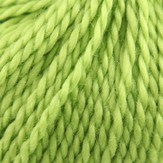
This yarn is Z-twisted.
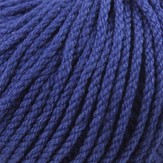
I am sure there is a reason that mills use one or the other.  Someday I will stop being such a slug and do the research and find out. In another life.

For now, all I can say is that the staggering bulk of what is produced has an S-twist.  Most yarns are produced with knitting in mind.  I never understood why certain of those yarns are awesome in knitting but look crappy in crochet. Perhaps not in a scientific way, but intuitively I now know that knitting tends to reinforce S-twist and crochet tends to rebel against it.

I suspect the reason is that the knitting yarn over is in the opposite direction of the crochet yarn over. I both knit and crochet and never think about this because I naturally do the right thing with whichever tools are in my hands. The process of crocheting makes a Z-twist. Each time you yarn over and draw a loop through you are giving the yarn a little counter-clockwise nudge. When you crochet with S-twist yarn, you are un-twisting as you go. If you crochet, un-crochet, crochet, un-crochet (as routinely happens in design) then a low-energy, loosely S-twisted yarn could lose all integrity before long. At the very least, the plies become separated and the yarn will be really splitty.

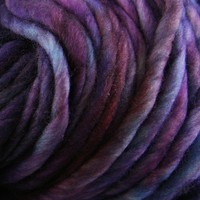
When I began examining yarns for their twisted ways, I thought to analyze my favorite yarns. Z-twist is almost always used with wool roving or singles like this:
Cotton is routinely Z-twisted, notably for sewing thread and crochet thread. And, as I discovered, the yarns I kept returning to time and again are not simply non-animal fibers, but they are also Z-twisted.

NaturallyCaron.com Spa (see Cari Clement’s blog post for NaturallyCaron.com about Doin’ the Z-Twist)
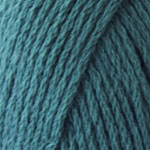
And the Tahki Cotton Classic family:

Twist (more accurately, the lack of twist) is partly the reason I’m drawn to tubular yarn, like South West Trading Company Oasis:
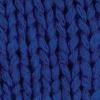
and ribbon yarn, like Tess Designer Yarns Microfiber Ribbon. With these constructions, you control the twist as you go.

Don’t tell my employers, but  I automatically wince when a design yarn arrives that has multiple plies that are loosely S-twisted because I know that project will be splitty crochet hell. And I grin from ear to ear when the yarn has the crochet happy twist.
Crochet Marathoning

It is an annual event in which you either participate whole-heartedly… or skip altogether for lack of intestinal fortitude, time or heaven-help-you, yarn.

The Holiday Crochet Gift Marathon does not have a specific start date nor a finish line (other than Christmas morning) and isn’t the same distance for everyone, which doesn’t seem fair.  Crocheting five projects for our most cherished loved ones is a leisurely stroll around the block; cranking out dozens of pretties to fill an extensive gift list is the whole 26 miles and 385 yards at full tilt.

In my life BCD (before crochet designing) I stayed the course year after year.  Once the professional deadlines began piling up I had to ditch all personal projects.  Work trumps play every time.  It has been nearly a decade since I’ve run the race.  But I remember what it was like.

Fun.  It used to be awesome fun, and I say that with no trace of sarcasm.  I loved the whole process, from compiling the naughty/nice list (in other words, choosing which giftees were most worthy of something hand crocheted and who wouldn’t appreciate the gesture enough to deserve the effort), to coordinating yarns and projects, to the all-night end weaving sessions, to seeing the reactions (usually delight) of the recipients on Christmas. One aspect I often didn’t like was having to give away certain items. There was always a project or two per marathon that I loved enough to want to keep.  This is why you should always follow Marathon Rule #3.

So I have gotten ahead of myself. What I thought to do today is share some helpful and hard-won tips regarding the Holiday Crochet Marathon, most of them common sense. In doing so I don’t claim any expertise in the race, I only hope to show you what I learned, and in the process, make myself feel better about not being able to run this year.

1– Start early.  Earlier than you think.  Earlier than is seemly.  August would have been good, but as it is already November you should really be starting now.  At least before Thanksgiving. An acceptable reason for waiting until after Thanksgiving would be if you want to take advantage of possible Black Friday sale prices on yarn.  But really, you should already be a mile off the starting line.

2– Choose projects for which you have plenty enough yarn on hand.  Do not risk the agony of running out of materials to complete anything.  I cannot stress this enough.  If you have 4 hanks of a yarn, don’t try to squeeze a whole adult sweater out of them.  Choose a different gift project that requires less than 4 hanks.

3– Use yarns you will not miss.  I once crocheted a marathon project in one of my finest acquisitions, the softest, bluest, most luxurious yarn brought back as a souvenir from a trip.  The wrap looked so good on me.  Really. I still regret having given it away. So under no circumstances should you dig into your personal absolute favorite stash.

4– Do use yarns and colors that will be appropriate and  happy for the ultimate recipient.  Say you have a butt load of blue yarn because you just love blue and you’d really like to make gifts with it but  your sister doesn’t like blue. Pick something else for her, in her best color, not yours.

5– Know your limits.  Instead of planning too many marathon gifts, it is better to plan fewer and give yourself extra time in case stuff happens.  If you are a super fast, efficient, single-minded crocheter and can say with absolute certainty that you will not be sidetracked by inclement weather, unexpected guests or other emergencies, then by all means do more.

6– Pace yourself.  Can’t marathon if you burn out too soon. Take a breather after each project.  Pat yourself on the back.  Have some wine or chocolate before going on to the next.

7– No hinting to anyone. Do not tell people that you are making hand-crocheted gifts this year. If they aren’t the ones getting the pretties then they’ll feel miffed.

8– Bigger is not better. Huge, elaborate projects make wonderful special gifts but have no place in the marathon queue. Keep your projects to a manageable size.  This does not mean the gifts have to be easy or simple or plain.  Instead of skimpy, think of smaller projects as unique showcases for your skills.

9– Pay particular attention to the details, like end weaving, blocking if needed, and finishing. This raises the level of your work from homemade to hand-crafted.

10– Pour your passion, your very being into every step of the marathon.  Think about the person for whom you are crocheting while you are crocheting. You’ll discover that each gift will be the most precious thing you could give; not just a pile of looped yarn, but a piece of yourself.

Happy Marathoning!

Crochet and Chocolate Cake

Perfect together.  But not at the same time.  See Crochet Rule #7 and instead of “coffee” read “chocolate”.

I leave the comfort of my home for a short list of reasons, aside from the obligatory everyday errands one must do in order to maintain health (grocery shopping) and solvency (trips to the bank).  Naturally, crochet events are high on the list but they are secondary to the continuing quest for chocolate cake.  Wherever both exciting crochet and great chocolate confections happen at the same time and place, well that’s got to be heaven. I had every expectation of finding the former while visiting London last week, but no idea what I’d discover concerning the latter. I shoulda had more faith.

On the very first day at Ally Pally, at 12:52 GMT, while standing on the Exhibitor Cafe queue (lunch line), I observed a wide variety of foods, not just the stodgy cuisine on which the population of the UK is rumored to subsist.  Aside from the obligatory fish and chips, sausage rolls and a sublime carved roast pork station, there was a nice grilled salmon and even salad.  Yes, salad.  But not simply salad on a plate.  I was offered a Jacket Potato, what we might call a stuffed potato, but taken to another level of invention.  You get an enormous baked potato, the top of which the server splits into quarters.  You’re already sure the potato skin is crisp and that the interior is fluffy carbohydrate perfection.  You’d be happy with just a pat of butter, maybe a dollop of sour cream.  But the Jacket Potato comes with your choice of stuff on top.  Surprising stuff, not the bacon and cheez whiz you see here on top of baked potato skins.  They do flaked tuna, shreds of real cheese, baked beans, composed pasta salads, mixed green salad.  Hokey Smokes, I think I even spied sprouts.

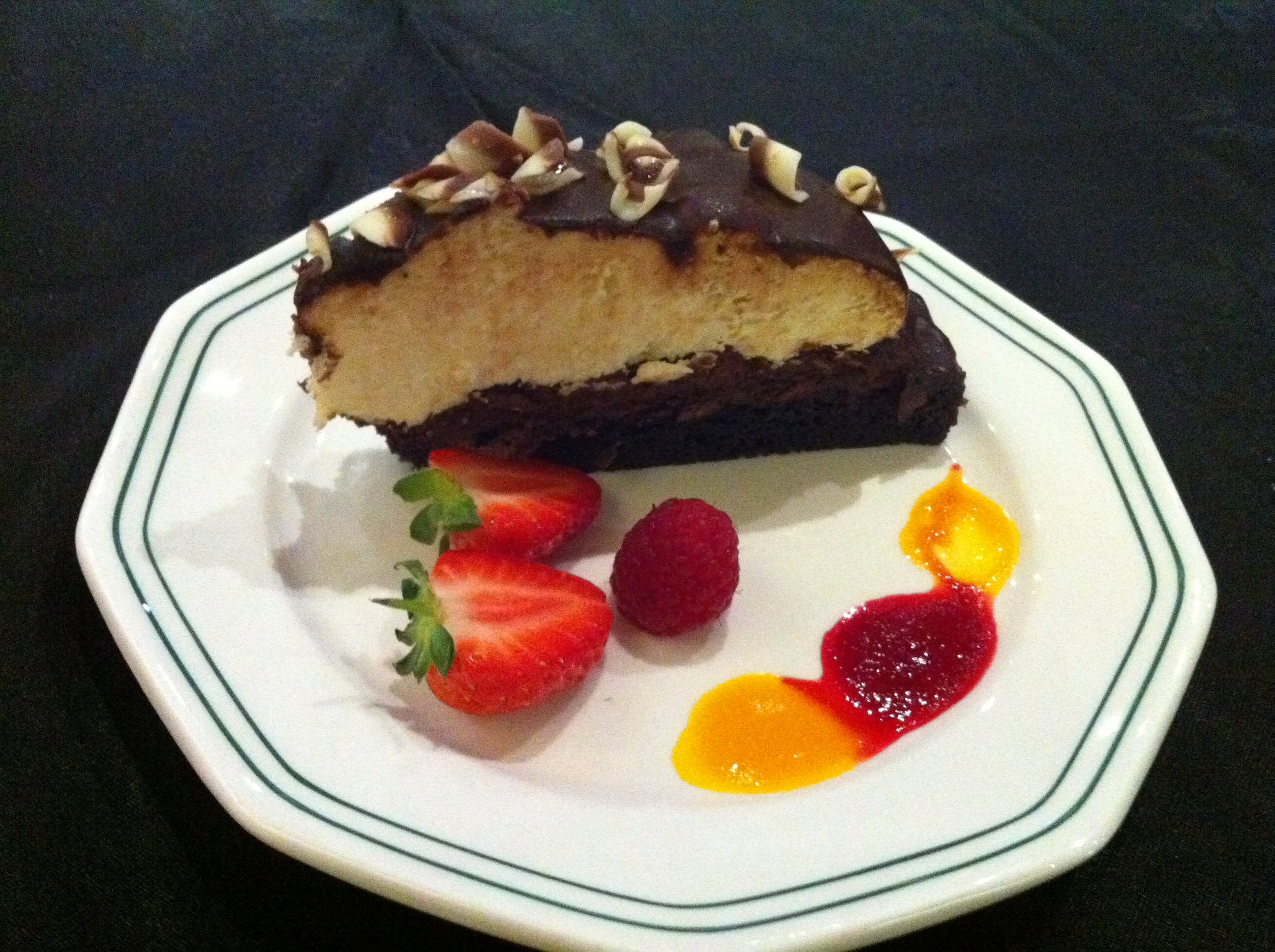
By the time I reached the back end of the queue for the dessert and beverage service, I thought I was ready for anything, but honestly I expected the usual cafeteria fare, a choice of puddings, or jello or small sweets, perhaps a slice of pie, but nothing prepared me for this:Here I must be absolutely truthful.  This is not my cake.  By the time I thought to ask Hyomin to take a picture of the cake for posterity, I had already inhaled half of it.  This is actually a photo of the cake belonging to a complete but friendly stranger sharing our lunch table.  She must have thought we were bonkers.  Or American.  Same difference.

So, refrain from drooling, as this was not plain cake, but more like a relative of our Boston Cream Pie, but with chocolate more of a player.  On a base of dense bittersweet chocolate cake there was a layer of silken chocolate mousse, then some vanilla infused creme patisserie, then a huge smothering of whipped cream, sealed with a thin chocolate glaze, finished  with curls of white and milk chocolate on top.  On the side was a smear of fruited sauce, a small split strawberry, and OMG the plumpest, most perfect fresh raspberry.  The plate was something you could expect at the end of a nice restaurant meal,  hardly the stuff to be found in and amongst the ordinary fare of lunch cafeterias.  I was impressed.  Floored, actually.  I had two.  No, not at the same lunch, silly.  On successive days.  I had to rethink my previously held opinion about Brits.  If this is a typical example of dessert offerings, then they definitely KNOW HOW TO LIVE!

The intensity of my chocolate cake quest deepened at each dinner opportunity.  As my hosts were choosing the restaurants all week, I had but to come along where they led. Two of the kids, Yuko and Daisuke, had just worked a long show in Moscow where there were no Japanese restaurants to be found.  Since they were longing for a taste of home, the first dinner was at a fantastic sushi place in central London  just off Leicester Square.  In typical authentic style there was no chocolate cake there.  Not a crumb of dessert there.

The second night we celebrated the birthday of the lovely Hyomin, who we decided should be 25 years old.  Thereabouts. She is originally from Korea, so they chose a very special Korean restaurant at her request and in her honor.  You can assume there was no chocolate cake there, either.  Normally there wouldn’t have been.  But, hey, it was a birthday party and we would not be denied.  Aki Harada arranged for a cake to be brought in from a downtown patisserie.  At the end of the superb Korean meal, lit with candles that spelled out Happy Birthday, came this little beauty:

No, not Mr. Harada, who is doing the cake slicing honors.  I mean that cake.  Once again, this was not a simple chocolate cake.  It was more of a gateau-like trifle.  The base was a light cocoa genoise (sponge cake), filled with a lightly sweetened layer of  cream swirled with mixed fruits, then more genoise, some whipped cream, with fresh fruits, dark chocolate cups of flavored cream on top.  The stunning presentation was highlighted by a ring of delectable bittersweet chocolate batons, like a tasty fence all around, tied up with a ribbon.  Awesome.  No, brilliant!

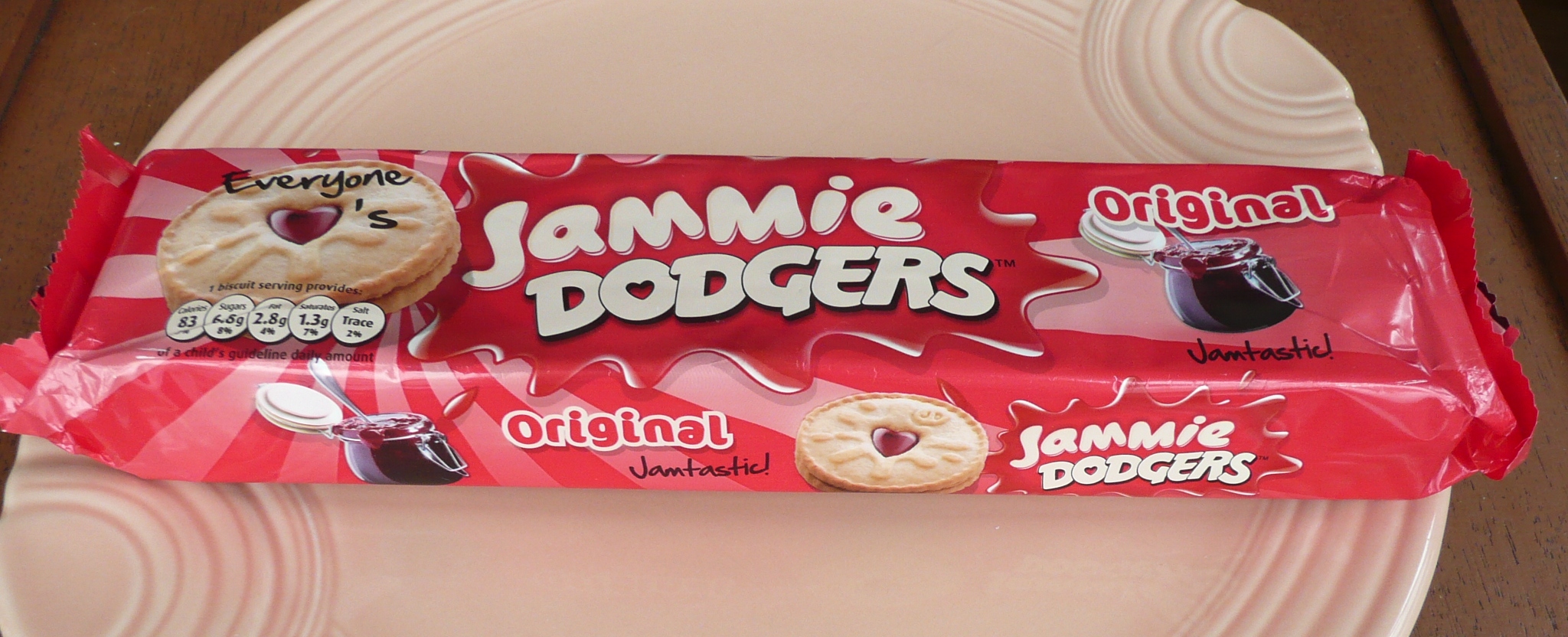
The rest of the dinner choices that trip were also Asian cuisine, including Chinese and Thai, and thus ended my chocolate cake discoveries. However, I did satisfy my curiosity about one UK sweet that had been puzzling me for a year.  Other American fan-geeks of the 11th Doctor of Doctor Who Series 6 will be thrilled to know I finally found out what’s up with Jammie Dodgers (spelled with “ie” and not “y”):

A typical English after-school tea time treat, these biscuits (cookies) are ubiquitous, sold in any corner grocery, one package containing 8 cookies costs one pound nine (around $1.70).    They remind me of Pepperidge Farm Verona cookies (the little rounds with fruit filling), except not as delicate and certainly not in the same way marketed to adult tastes.  Or maybe thumbprint cookies, but not. Jammie Dodgers are crisp rounds of shortbread cookie with a gummy sort of  filling sandwiched between.  The jammy part tastes of raspberry, but it’s a mix of flavors really.  It’s the sort of food nobody admits to eating or liking (much as Pop-Tarts are viewed here), and yet somebody is enjoying them because they are everywhere.  Not a sophisticated sweet by any means.  Yet strangely compelling.  A perfect match for hot, strong tea. I took away two packages but polished off a whole one during the endlessly boring flight back to Philadelphia.  Now that I’ve done the show and tell, I can eat this one, too! 🙂

Broomstick Crochet Sweeps Ally Pally

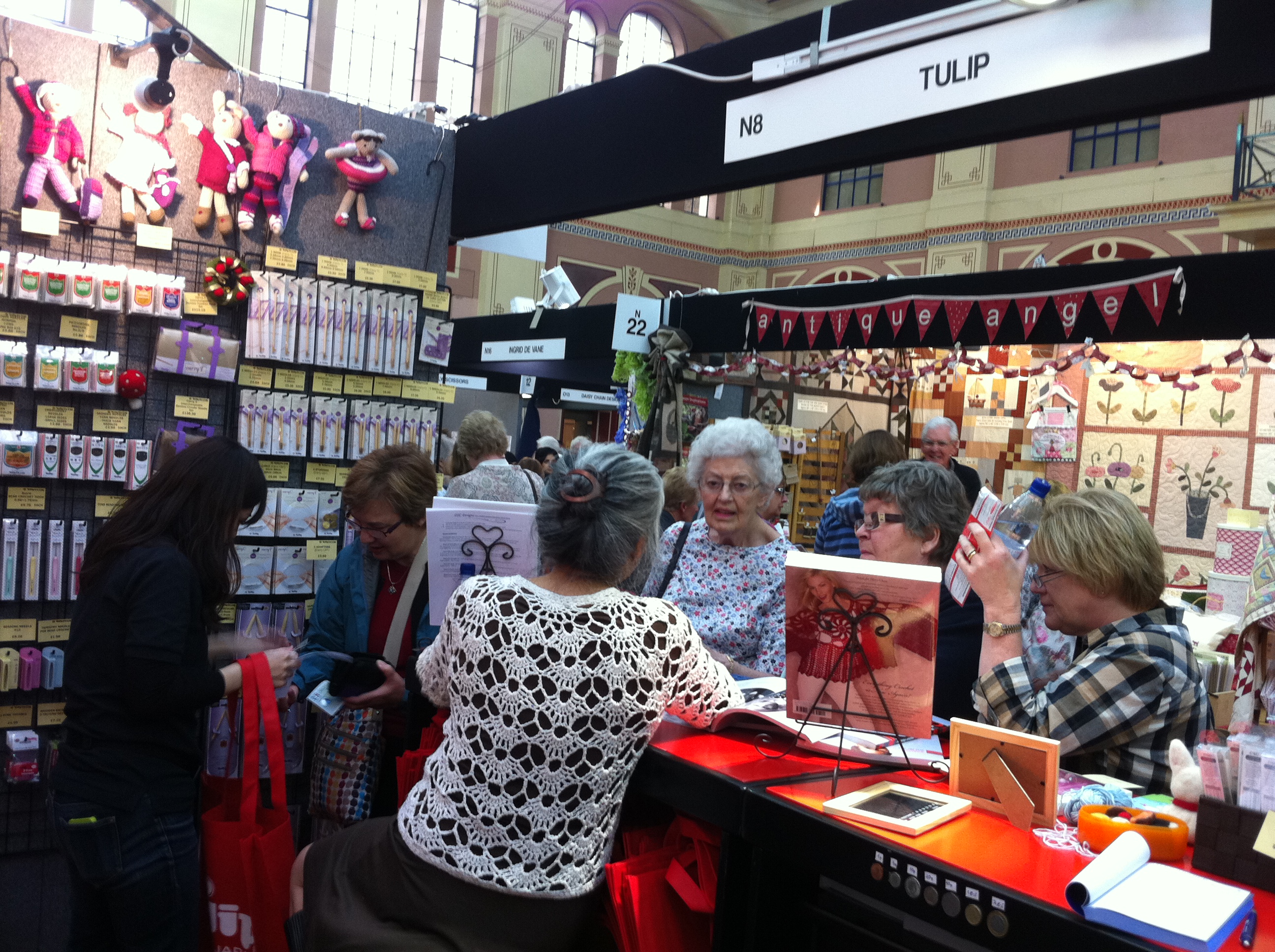
Situated at the corner of  Awesome and Brilliant, the Tulip Company booth at the Knitting and Stitching Show at Alexandra Palace in London last week drew wave upon wave of intrepid UK crocheters.  By the way, the locals do not say “awesome”.  I suppose I was the only person among 50,000 who allowed that expression to pass her lips.  Every time I let that wretched word slip I was invariably greeted with comments like “Are you from America?”.  And as hard as I tried to say “Brilliant!” instead of the A word, I never got the hang of it. The more I attempted to speak Brit, the worse my American accent grew.  At least I could be understood by most.  I hope.The four day show was not nearly long enough to take in all the sights, with over 300 exhibitors and constant activity. Whiplash was the order of the day because every square meter of this gorgeous venue was jammed with head-turning displays, boundless inspiration and wondrous wares for sale.  I can report two other inconsequential downsides to the event: 1) trodden toes from making your way as quickly as possible (like swimming upstream!) to the ladies during my breaks, and 2) aching dimple muscles from smiling.  Other than that, I not only survived the trip but returned with renewed dedication to my craft.

I didn’t keep a tally for the first two days, but I counted the number of Broomstick crochet rows I did on Saturday and extrapolated that I must have completed around 80 of my 5 to 10 minute demonstrations over the course of the event.  It was tremendously helpful that I did not need to explain “slip as if to purl” even once, because practically every visitor reported that she could both knit and crochet, contrary to my experience with a very different attitude among US stitchers.  The impression I got was that there would be much more crocheting being done in the UK if my new friends had more and better access to stylish designs. The hunger for fresh crochet patterns and unique technique (and Etimo crochet hooks, of course) was evident in each appreciative smile and in every voracious gaze. Here’s a look at what I experienced from the inside of the Tulip booth.I’d like to welcome everyone I met at Ally Pally to my site.  I see quite a few UK friends among the comments to my last post so I guess you’ve already followed the links I gave you and found me.  Hey, I am truly terrible with names and faces, so  if you recognize yourself in any of the images here, please let me know and I’ll tag you.

A million thousand thanks to my hosts in London, my new family: Mr. Kotaro Harada, President of Tulip Company (on the left),  Ms. Hyomin Kang (the photographer and sadly not in the shot, but whom you’ve seen on this blog modeling the teeniest award-winning gowns in past CGOA Design Competitions), and my three adorable adoptive kids, Ms. Yuko Mizumoto (center), Mr. Taisuke Itoh (right) and Ms. Aki Harada (most likely swimming upstream at the time!). Thanks also to Katie Fowler of GMC book distributors, who arranged for my book signings and supplied the dozens of copies of my books that literally flew out of the booth, and a shout out to Diana and the staff of our retail partner at the event, The Crochet Chain.

In a bit I will be prepared to address the issue of Chocolate Cake in the UK. 🙂

Winning Crochet on the CGOA Runway

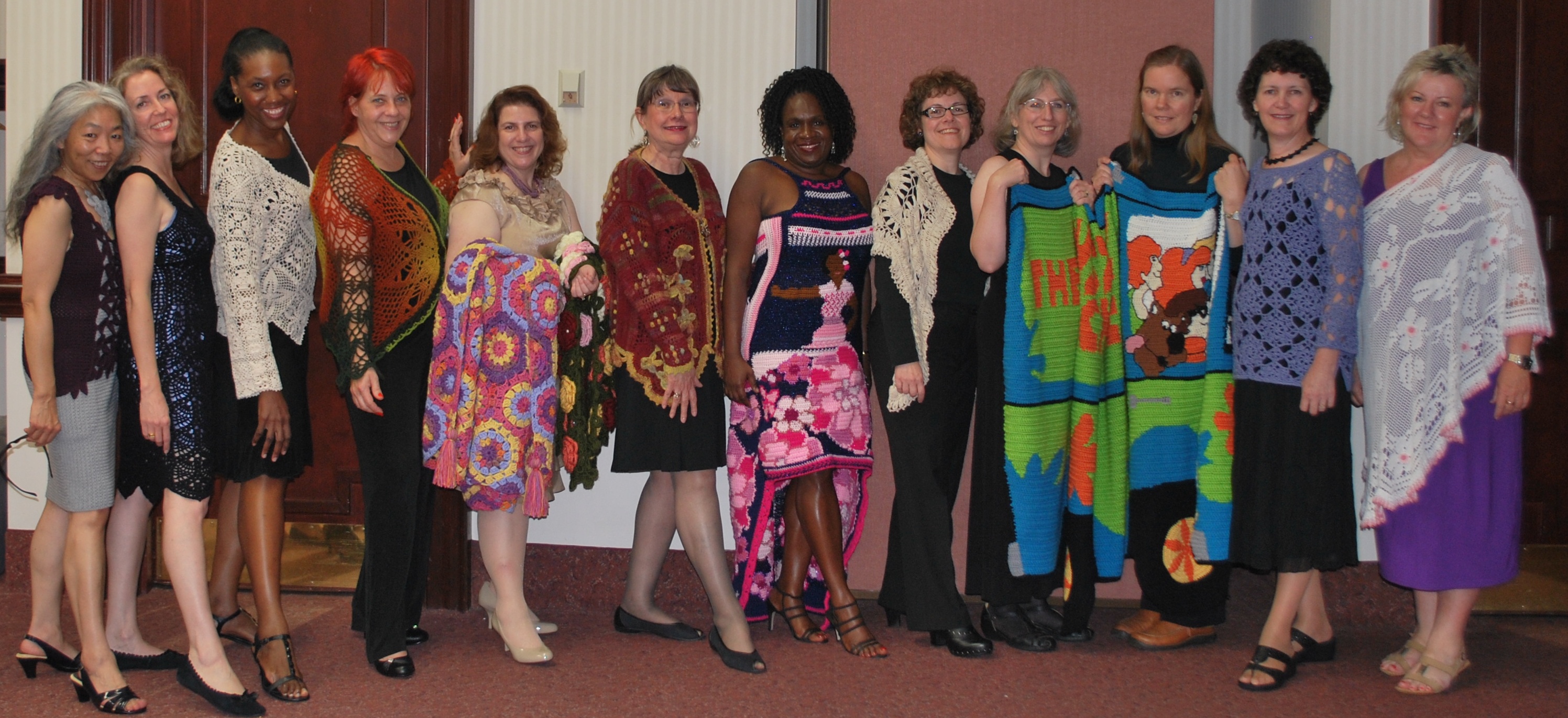
I tried to hang off the edge of the group so maybe I’d get cropped out of the photo for being… well… too out there.  But no dice. Here’s a group shot of the Parade of Design Competition winners, all the entries that could be modeled, backstage at the CGOA 2011 Fall Fashion Show in Greensboro, NC.

From left to right:

  • Linda Skuja’s Queen of Fall modeled by yours truly.
  • Victoria Johnsen Carrington’s Modern Victorian Black Dress modeled by Vashti Braha.
  • Diane Halpern’s So Many Motifs, So Little Time, modeled by Carlotta Craig.
  • Rasta Rose Jacket, designed and modeled by Tammy Hildebrand.
  • Shari White with her two winning afghans, Happy Hexagons and Wild Irish Roses.
  • Stephanie Hatfield’s Stonecrop, modeled by Karen Klemp.
  • The always fabulous Willena Nanton in her design Flower Princess.
  • Sandy Gold’s Lucy Shawl, worn by Edie Eckman.
  • Laurinda Reddig’s Mystery Machine Afghan, paraded by Andee Graves and Bonnie Barker.
  • Susan Lowman showing off her Spa Tunic.
  • And Kathryn White’s Birds N Blossoms Shawl on the lovely shoulders of Jenny King.

Congratulations to all our winners and a big salute to all our intrepid models for the evening.

Oh, and FYI, I had formerly believed that CGOA conferences were fueled by chocolate.  Nope.  Twizzlers.  Definitely Twizzlers.